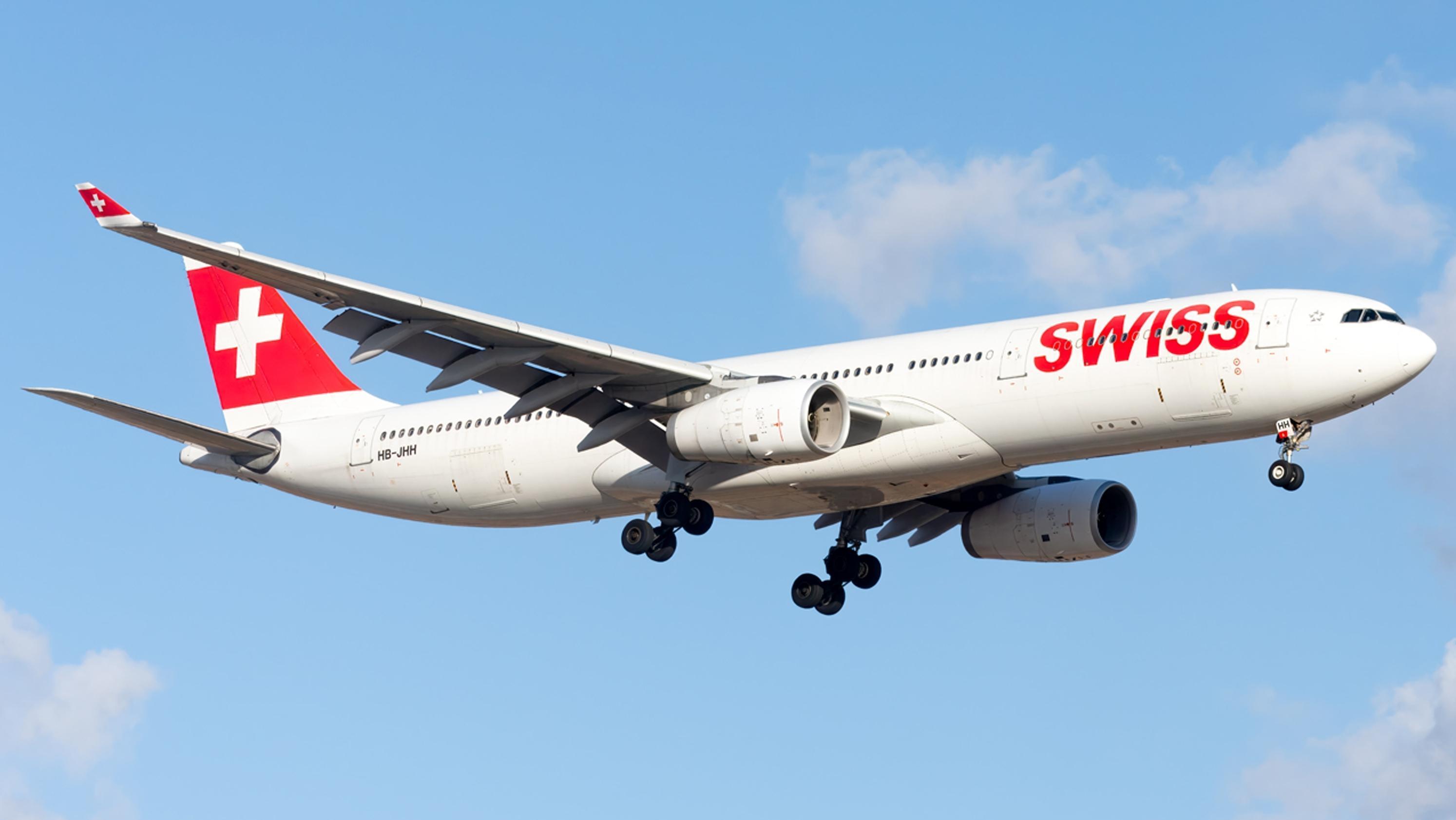
A small headphone charging case caused a mid-flight diversion of a SWISS International Air Lines aircraft earlier this week after becoming lodged in a passenger seat and emitting smoke during a flight from Zurich to New York.
Flight LX16 was en route from Zurich to New York on Monday, July 27, when smoke was detected in the cabin. Following established safety procedures, the cockpit crew diverted the aircraft to Bangor International Airport in Maine, where it landed safely.
According to SWISS, an investigation by a technical team dispatched to Bangor found that the source of the smoke was a commercially available headphone charging case equipped with a power bank function. The device had slipped into a seat mechanism, where it became jammed and damaged, causing it to overheat and produce smoke.
The airline emphasized that there was no fire in the cockpit, addressing reports that circulated following the incident. SWISS noted that smoke was visible only in the front section of Business Class and said the U.S. Federal Aviation Administration later corrected its initial report that incorrectly referred to a cockpit fire.
Power Bank Use During Flights, Banned
The incident has prompted the airline to reiterate its onboard rules regarding lithium battery-powered devices and power banks. Since the beginning of 2026, SWISS has prohibited the use of power banks during flights. Passengers may still carry up to two power banks, but they must remain on the passenger's person, in a seat pocket, or in carry-on luggage stored under the seat. They are not permitted in checked baggage or overhead compartments.
The same restrictions apply to electronic cigarettes.
SWISS also reminded travelers to immediately notify cabin crew if an electronic device becomes hot, emits smoke, is damaged, or falls beneath a seat. Cabin crews are equipped with specialized "Lithium Safe Bags" designed to safely contain overheating devices.
The airline praised the actions of the flight and cabin crews, noting that the diversion decision followed standard procedures practiced regularly in simulator training.
"When there is smoke of unknown origin on board, we take no risks," SWISS said in a statement, adding that selecting the nearest suitable airport remains standard practice in such situations.
The incident serves as another reminder of the risks associated with lithium batteries on aircraft, particularly as airlines worldwide continue to tighten rules governing power banks and other portable electronic devices.