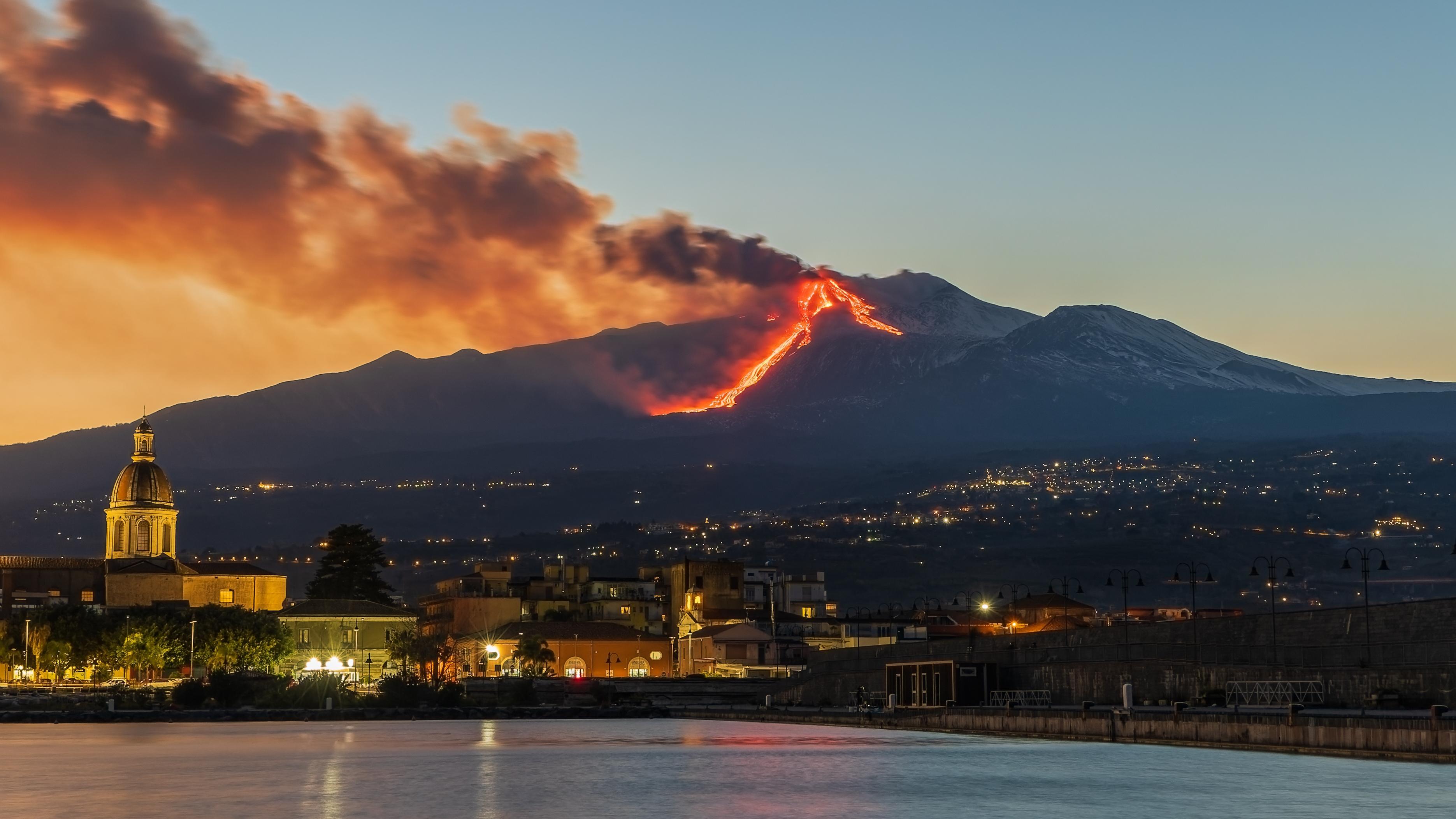
Mount Etna experienced a fresh eruptive episode on Thursday morning, July 30, 2026, with lava fountains, a pyroclastic flow, and an ash cloud rising approximately 7 kilometers above sea level, according to Italy's National Institute of Geophysics and Volcanology (INGV).
The activity began around 01:30 UTC at the volcano's Voragine crater and gradually intensified through the morning. At 07:59 UTC, monitoring cameras detected a small pyroclastic flow moving toward the Valle del Bove, a largely uninhabited area on the volcano's eastern flank.
INGV said the eruption evolved into "very sustained" Strombolian activity accompanied by a lava fountain. By approximately 07:00 UTC, ash emissions had intensified significantly, creating a volcanic cloud that drifted toward the western side of the volcano.
Ashfall was reported in the town of Bronte, located on the western slopes of Etna.
Volcanic tremor levels, an indicator of magma movement beneath the surface, increased during the night before rapidly declining after 08:00 UTC, although they remain elevated. Scientists also recorded ground deformation near the summit, consistent with ongoing volcanic activity.
Since approximately 08:30 UTC, Strombolian activity has gradually diminished and is currently described as "very modest." However, INGV noted that intense ash emissions continue.
Mount Etna, Europe's most active volcano, frequently produces eruptive episodes ranging from ash emissions and lava fountains to more significant explosive activity. Authorities continue to monitor the situation closely, particularly due to the potential impact of volcanic ash on nearby communities and air traffic in eastern Sicily.
At the time of the latest update, no injuries or evacuations had been reported.