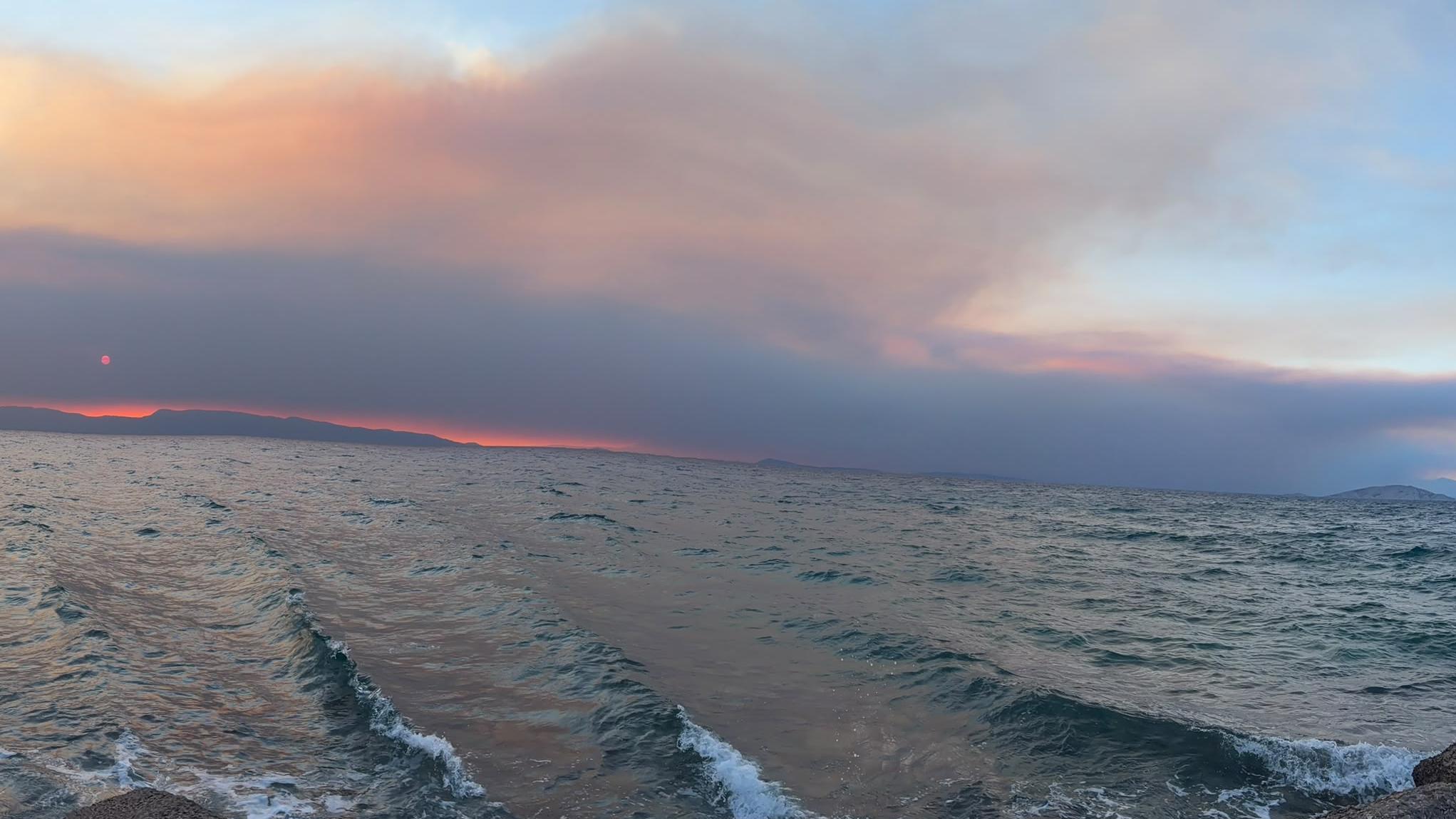
A new wildfire broke out southeast of Athens on Monday, August 10, as strong winds fueled the flames and prompted an evacuation order for a nearby village.
The fire started in the Kouvaras area of Attica, around 60 kilometers southeast of the Greek capital. According to Greece's Fire Service , at least 172 firefighters and around 40 vehicles were deployed to battle the blaze, supported by two water-bombing aircraft and four helicopters.
Strong winds have complicated firefighting operations, with gusts reported at more than 70 kilometers per hour. Authorities ordered residents of Agios Stylianos, a village near Kouvaras, to evacuate as the fire spread.
The latest incident comes as Greece remains on heightened wildfire alert following a particularly destructive fire near Athens less than two weeks ago. That blaze, which broke out northwest of the capital, burned more than 11,000 hectares of pine forest and farmland before firefighters brought it under control after five days.
The earlier fire was also complicated by extreme winds, with gusts reaching up to 130 kilometers per hour . Two helicopter crew members were killed in a collision while taking part in firefighting operations.
The latest conditions are expected to keep pressure on emergency services. The Hellenic Fire Service has issued its fire risk forecast for Tuesday, August 11, placing several areas at very high fire risk, Level 4 .
The highest-risk areas include Attica and Kythira, Boeotia, Argolis and Corinthia, as well as the Cyclades, Lesbos, Chios, Psara, Samos, Ikaria and Skyros. Parts of Evia, Phthiotis and Laconia are also under the Level 4 warning.
Several other areas across mainland and island Greece have been classified under high fire risk, Level 3 .
The continuing threat is particularly significant for travelers visiting Athens and popular Greek islands during the summer season. Visitors should monitor official alerts, follow evacuation instructions immediately and avoid entering areas affected by active wildfires.
Greece has experienced increasingly intense and frequent wildfire activity in recent years, with scientists linking the trend to climate change. Attica has been particularly vulnerable, with experts warning that repeated fires are placing increasing pressure on the region's forests and communities.
Authorities continue to urge residents and visitors to remain vigilant as dry conditions, high temperatures and strong winds can cause fires to spread rapidly.