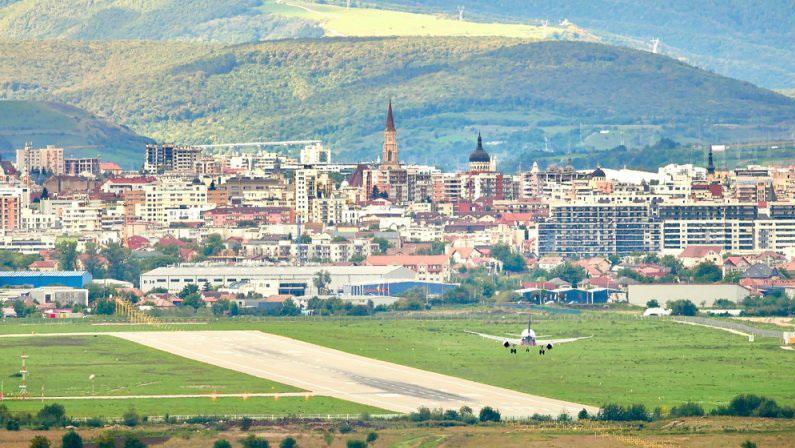
Cluj "Avram Iancu" International Airport , Romania's second-busiest airport, is preparing for a new stage of development, with the local council setting strategic priorities for the airport's 2026-2030 administration.
Authorities have approved the complete selection plan for the airport's new Board of Directors for the 2026-2030 term.
The objectives include continued growth in passenger and cargo traffic, along with efforts to attract new airlines and open additional international destinations.
The airport's future management will also be expected to increase flight frequencies by providing marketing support that reflects developments in the national and European aviation markets.
More Flights and New Destinations
The council considers air connectivity a major contributor to the development of Cluj-Napoca over the past two decades.
The strategic document states that the growth of air traffic at Cluj Airport has contributed significantly to the city's emergence as an important economic, academic, medical, cultural and social center in Romania.
For the next four years, airport management will therefore be tasked with maintaining this momentum by expanding the route network, attracting new operators and increasing frequencies on existing routes.
Cluj Airport Plans a Greener Future
The airport plans to expand the use of renewable energy, including photovoltaic panels, improve the energy efficiency of its buildings, and strengthen waste management.
The strategy also calls for the gradual transition to electric vehicles and other zero-emission technologies for ground operations.
Recently, the airport took another step toward the transition to green energy by purchasing three electric vehicles, two to supply aircraft with drinking water and service aircraft, and one ambulift.
Cluj Airport is already seeking European funding for projects to replace energy-inefficient machinery and equipment with zero-emission alternatives and to create green infrastructure to power airport equipment.
Electric Buses and Park & Ride
The plan also includes improving connections between the airport and the surrounding region.
The strategy calls for deeper integration with Cluj-Napoca's local and metropolitan public transport network, as well as better connections with regional road and rail infrastructure.
Among the proposed solutions are electric or other low-emission buses and Park & Ride facilities designed to make reaching the airport easier while reducing reliance on private cars.