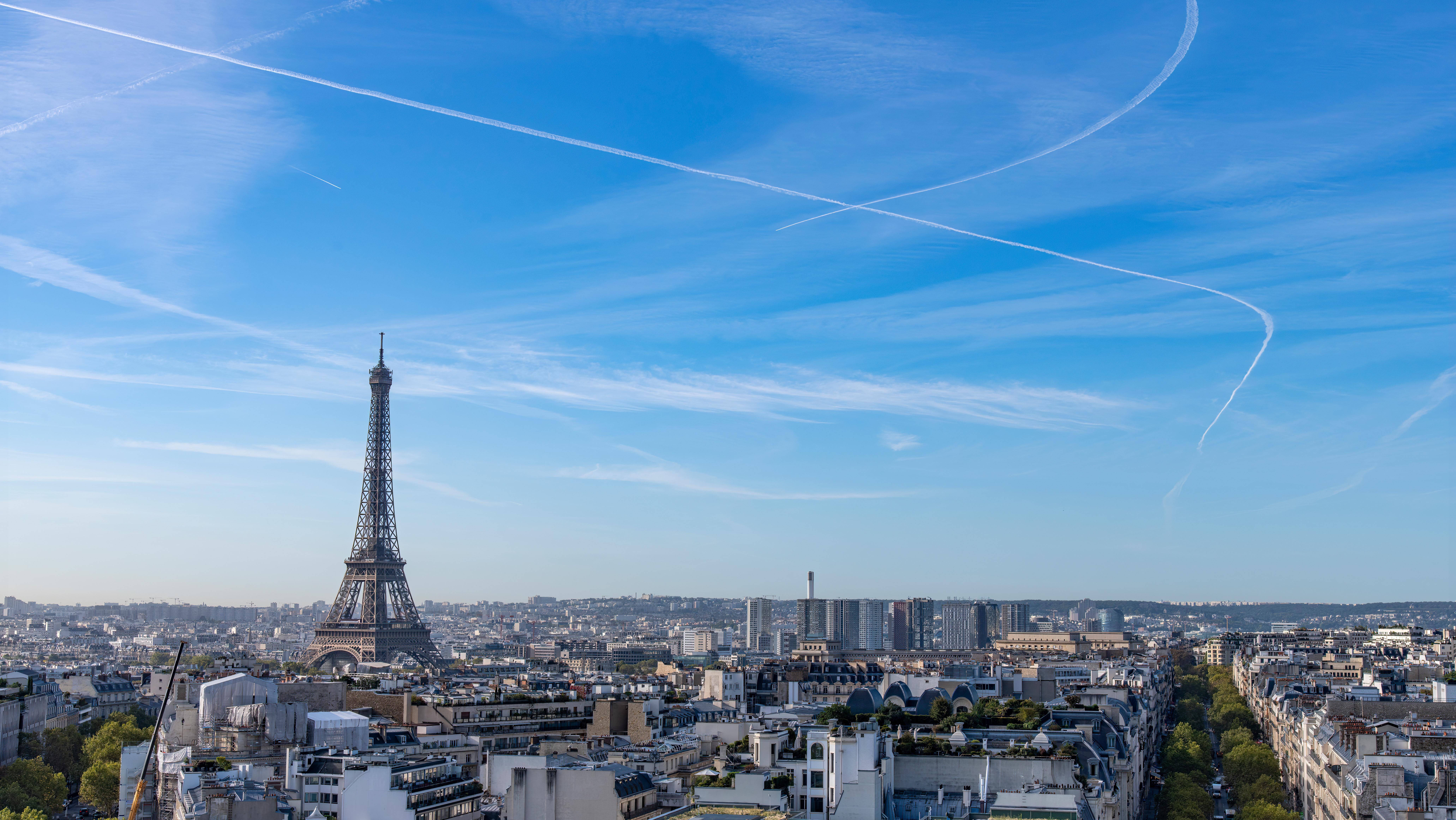
Air France has released the results of a major research campaign examining how commercial flights could reduce their climate impact from condensation trails, popularly known as contrails.
The airline says the work focused on the so-called non-CO₂ effects of aviation and tested whether aircraft could avoid atmospheric areas where persistent contrails are more likely to form.
What Are Contrails
Contrails are the white trails sometimes visible behind aircraft at high altitude. They form when water vapour from aircraft engines encounters sufficiently cold and humid air and freezes around fine particles, including soot. Most disappear within minutes, but under certain atmospheric conditions they can persist for several hours, spread and develop into artificial clouds that can contribute to warming.
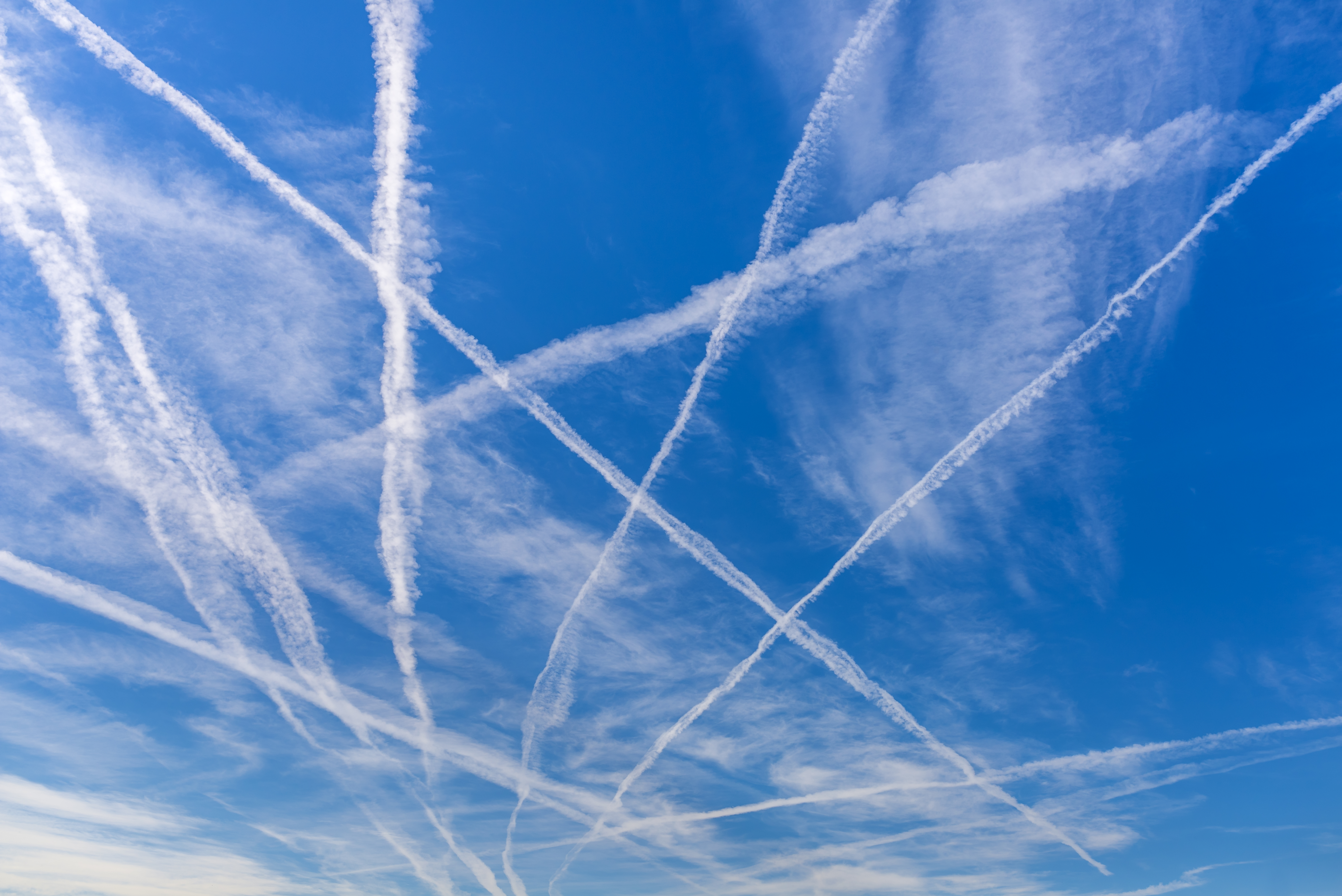 Contrails. Photo: Shutterstock
Experiment with 4,300 Flights
Air France says its latest experiment involved almost 4,300 commercial flights over the North Atlantic between February and April 2026. The campaign was carried out with French start-ups Estuaire and Klima, which work on technologies designed to reduce aviation's climate impact.
The North Atlantic was selected because atmospheric conditions in the region provide useful opportunities for studying persistent contrails.
The experiment had two main objectives: to improve understanding of the conditions that produce the most climate-impacting contrails and to determine whether flight paths could realistically be adjusted to avoid those areas during normal airline operations.
130 Flights Were Rerouted
Using weather information and other analysis, Air France identified 245 flights with a high potential for climate impact from persistent contrails. Alternative routes were then calculated and assessed for those flights.
Of those 245 flights, 130 were ultimately rerouted.
Air France describes the project as a “test and learn” approach, using real commercial operations to compare scientific models with the practical requirements of long-haul aviation.
According to the airline, the results indicate that targeted avoidance strategies can prevent some contrails from forming or significantly reduce their potential climate impact.
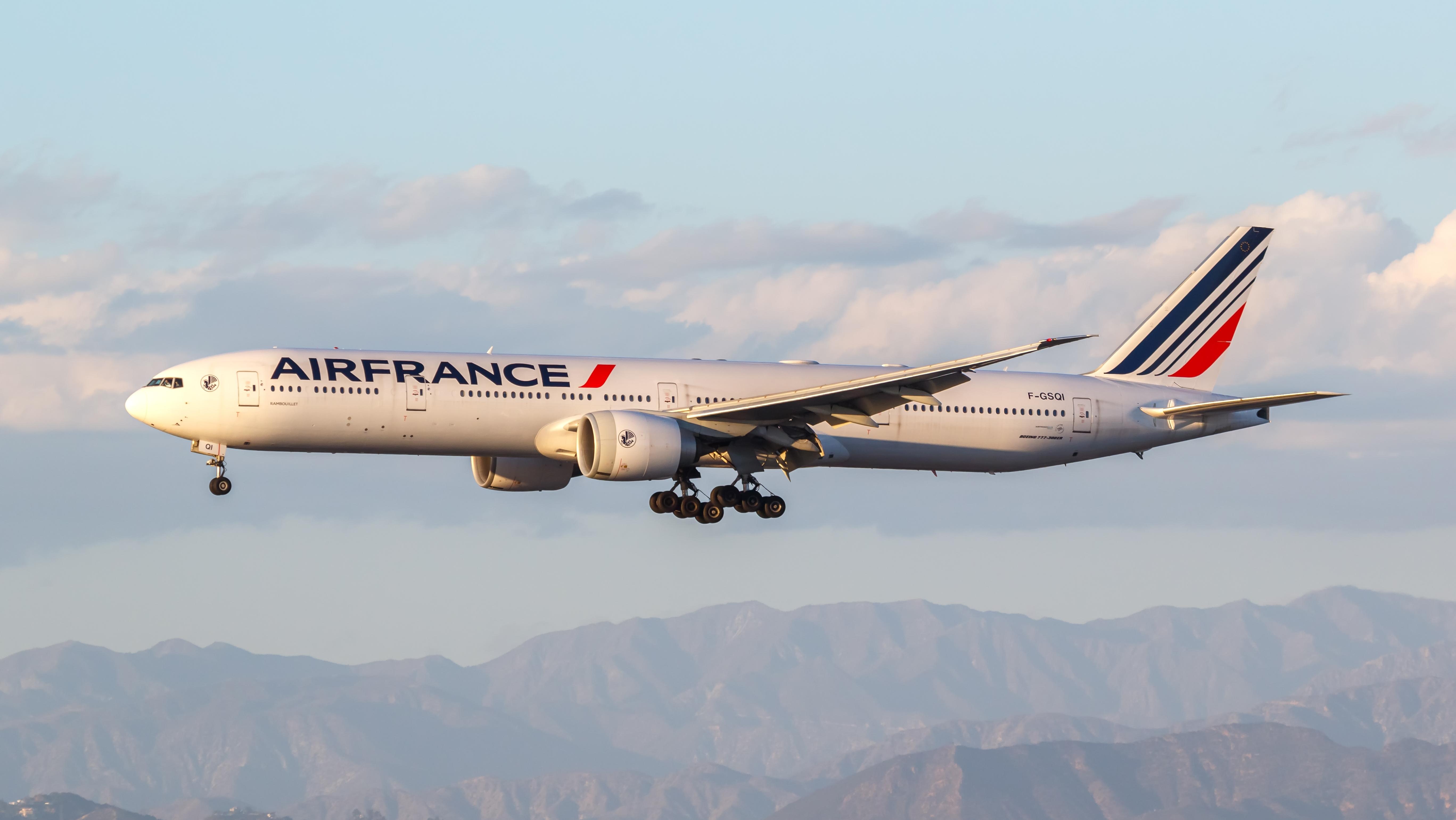 Air France Boeing 777-300. Photo: Shutterstock
One of the most notable findings was the concentration of the effect among a relatively small number of flights. Air France says 3% of the flights in the study accounted for 25% of the total contrail impact across the research sample.
That finding supports a targeted approach rather than attempting to modify the routes of large numbers of flights.
Air France Reports Measurable Reductions
Air France says the flights whose routes were modified avoided the equivalent of 22,000 tonnes of CO₂ and reduced the climate impact associated with contrails by 8% across the study area.
Looking specifically at the flights that were actually rerouted, the airline reports a 57% reduction in the climate impact of contrails and a 36% reduction in overall climate impact.
The figures are based on the airline's analysis of the experimental campaign and form part of ongoing research into aviation's non-CO₂ effects.
Air France itself notes that there are still uncertainties in measuring the precise climate impact of these effects. Its sustainability information says contrails and the high-altitude clouds they can develop into can have a significant warming effect, particularly in the short term.
Part of a Wider European Research Project
The testing was conducted within the European CICONIA project, which brings together scientific organizations, airlines and air traffic management stakeholders.
Air France says the cooperation with Estuaire and Klima combined climate modeling with the operational expertise needed to test potential solutions during real flights.
The airline says the next challenge is determining how such measures could eventually be applied on a larger scale. Any change to a flight's planned route remains subject to approval by air traffic control and must also take operational constraints into account.
Vincent Etchebehere, Air France's Director of Sustainable Development and New Mobility, said the campaign was an important step in testing ways to reduce the climate impact of contrails under real operating conditions.
He added that the results would be shared as part of ongoing European and scientific research, adding that Air France wants to contribute flight data and operational expertise to identifying solutions that could work at scale.
Laurent Lafontan, Deputy General Manager of Air Operations at Air France, said teams both on the ground and in the air were involved in the work and that the tests showed that practical measures to reduce contrail effects could be implemented.
Air France has previously tested contrail avoidance, including a 2023 experiment with Météo-France involving four European and intercontinental flights. The airline says the process involves predicting areas where persistent contrails could form, examining possible avoidance routes and later checking the results using satellite imagery.
However, the latest campaign gives Air France a much larger real-world dataset and adds to the airline's research into reducing the climate effects of aviation beyond its direct CO₂ emissions.