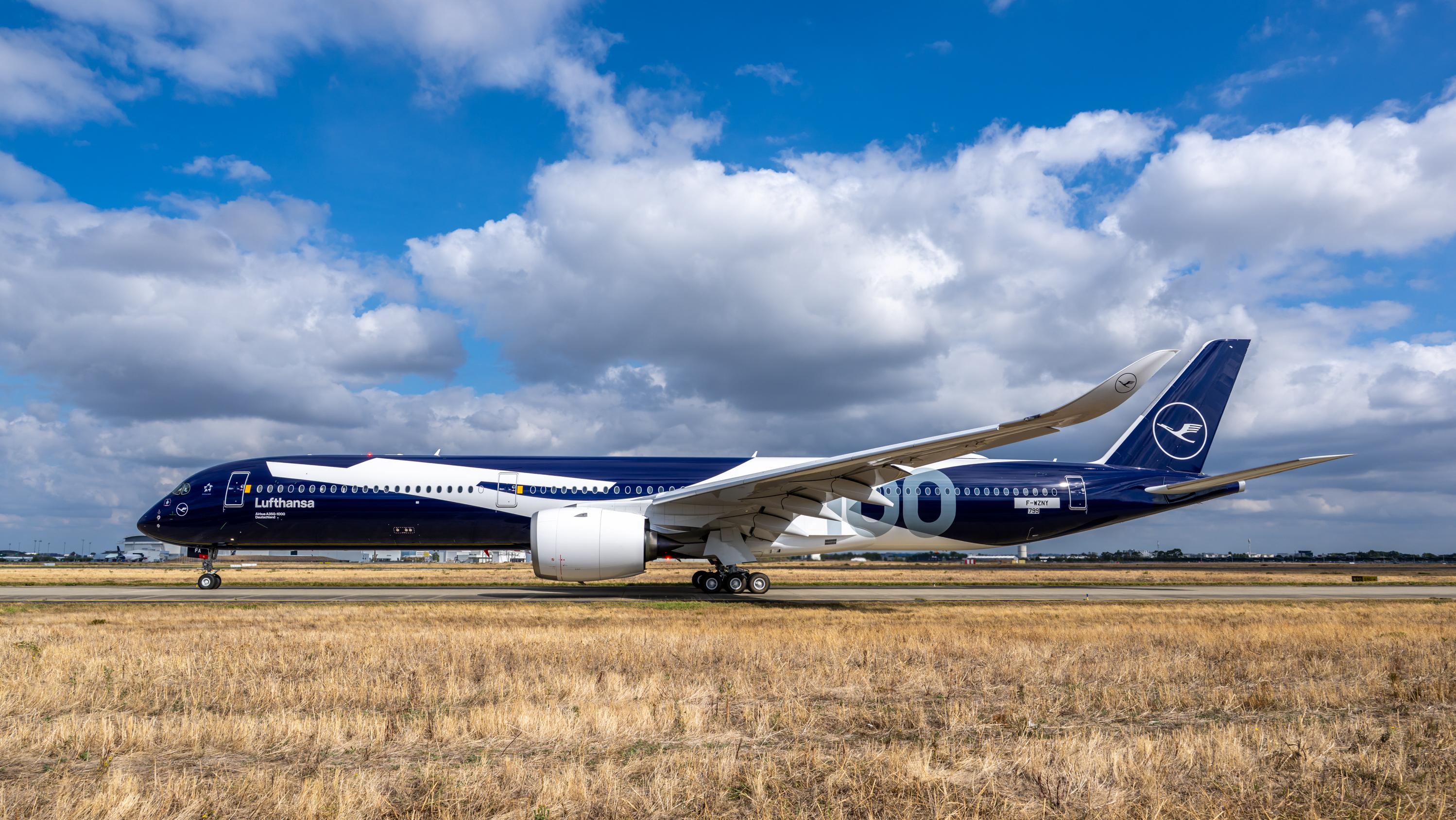
Lufthansa is preparing to introduce its first Airbus A350-1000, with the new long-haul aircraft scheduled to make its passenger debut on a flight from Munich to Tokyo Haneda on December 3, 2026. Shanghai and Singapore are expected to join the aircraft’s route network in the following weeks.
The first aircraft, named Deutschland and registered as D-AIFA, is due to arrive in Munich from Airbus’s Toulouse facilities in mid-November. After final preparations, it will enter commercial service with Lufthansa’s new Allegris cabin.
Flights to Tokyo, Shanghai and Singapore will be operated by a combination of Airbus A350-1000 and A350-900 aircraft, with the two models alternating on the routes.
Heiko Reitz, Lufthansa Airlines board member and Munich hub manager, said the aircraft would play an important role in the airline’s fleet renewal plans.
The A350-1000 will become Lufthansa’s largest passenger aircraft and is part of the Lufthansa Group’s biggest fleet modernization program to date. According to the airline, the new flagship offers 40% more Business Class and Premium Economy seats, strengthening Munich’s role as a hub for premium long-haul travel.
The delivery also marks two milestones for the group. The aircraft is the 700th Airbus delivered to Lufthansa Group and the seventh aircraft in its anniversary fleet, which features special liveries celebrating the company’s 100th anniversary.
Lufthansa has ordered 15 A350-1000s, with deliveries scheduled through 2030. The first 10 will be operated by Lufthansa and based in Munich.
Measuring 73.8 meters, the A350-1000 is around seven meters longer than the A350-900. Lufthansa’s four-class configuration will accommodate 300 passengers: four in First Class, 49 in Business Class, 35 in Premium Economy and 212 in Economy. The First Class cabin includes two individual suites and one larger Suite Plus, while eight Business Class seats are configured as suites.
The aircraft is powered by Rolls-Royce Trent XWB-97 engines and uses advanced lightweight materials, including composites, titanium and aluminum alloys. Airbus says the combination of aerodynamic design and newer technologies can reduce fuel consumption and carbon dioxide emissions by 25% compared with previous-generation aircraft. The A350-1000 also meets stringent aircraft noise standards.