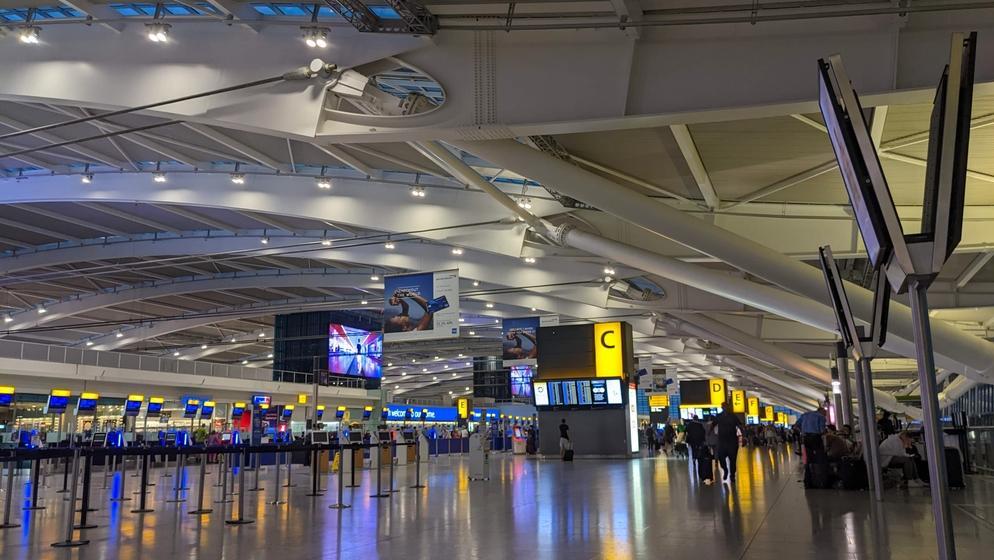
Significant change in the global aviation rankings: London's Heathrow Airport, one of the world's busiest and most central airports, has lost its status as the world's most connected airport to Istanbul International Airport.
This follows an official announcement by Heathrow management as part of its operating and financial report for the first nine months of 2026.
In a statement, Heathrow notes that the accelerated growth of competing airports around the world highlights the need to expand the capacity of the British port.
One of the most striking figures in the report concerns airlines seeking to enter operations at the airport or expand their existing operations: no fewer than 40 airlines are waiting to receive the opportunity to operate at Heathrow or increase the number of their takeoff and landing windows.
However, the airport is operating close to capacity, and its management has made it clear that it cannot meet these demands within the existing infrastructure.
Heathrow's loss of primacy reflects the intensifying competition between the world's major airports for passenger traffic, airlines and connecting flights.
Istanbul Airport has become one of the most prominent centers in international aviation in recent years, taking advantage of Turkey's geographical location between Europe, Asia, Africa, and the Middle East.
The expansion of the flight network from Istanbul, alongside Turkish Airlines' international operations, strengthens the port's role as a transit point between continents.
Heathrow, on the other hand, points to infrastructure limitations as a major factor hindering the expansion of its route network.
It is important to emphasize that this is an air connectivity index, not a statement that Istanbul has overtaken Heathrow in passenger numbers or any other index.
According to Heathrow management, the port operated more than 100 long-haul routes during the summer of 2026, of which 68 were unique to the UK.
Demand for its operations remains high, but its ability to absorb additional companies is limited due to the intensive use of its two runways.
Heathrow notes that it is the world's busiest airport among airports operating with only two runways.
On August 2, 2026, it even recorded its busiest day in its history, with approximately 272,000 passengers in one day.
Despite the impressive activity figures, the port management warns that without significant investment in infrastructure and capacity expansion, London may continue to lose business opportunities to competing international airports.
Heathrow management continues to advance airport expansion plans, primarily increasing runway capacity.
According to estimates presented by the port, the expansion of infrastructure could support the creation of approximately 108,000 jobs and 5,000 professional internships, and add approximately £17 billion per year to the British economy by 2050.
In addition, Heathrow estimates that expanding the aviation hub could support up to £150 billion in additional international trade annually.
Despite losing its connectivity lead, Heathrow continues to show significant passenger activity. From January to September 2026, 62.9 million passengers passed through the airport, compared to 63.3 million in the same period in 2025, a decrease of 0.6%. At the same time, the airport reports that 98.5% of passengers passed security checks within the framework of the established service standard.
Competition between major aviation hubs is not just a battle for titles and ratings. It affects the variety of flight options, the availability of connecting flights, and airlines' ability to expand their operations.
A highly connected aviation hub lets passengers reach more destinations through connecting flights and can also improve the variety of options and competition.
For international passengers, including Israelis who use Heathrow as a hub for connecting flights, capacity expansion could be significant in the future. In the meantime, Heathrow management's message is clear: London still has one of the world's busiest and most central airports, but the battle for the title of leading connectivity hub has already shifted to Istanbul.