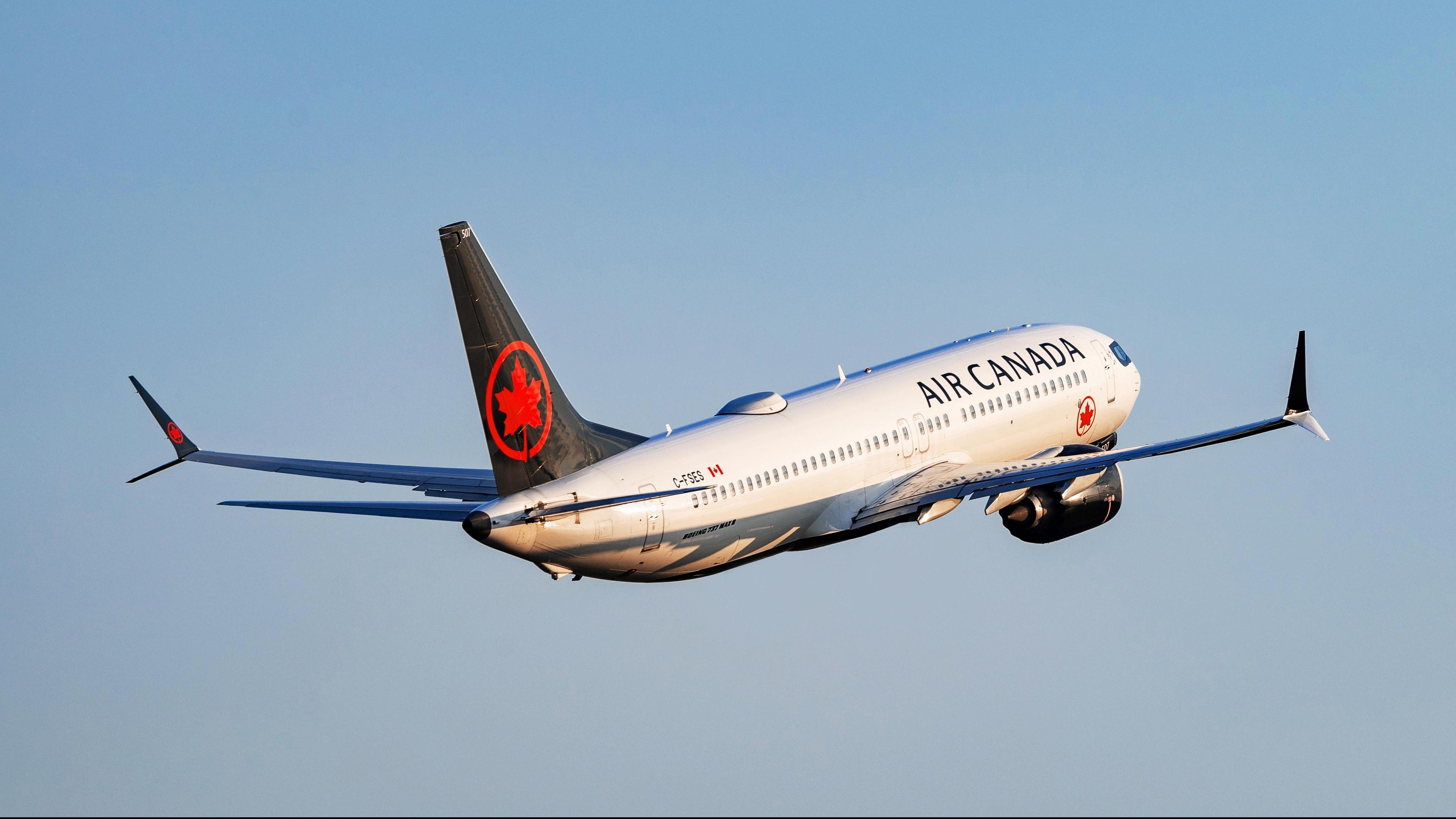
Canadian carrier Air Canada announced its financial results on October 29, reporting strong passenger demand, higher ticket yields and substantial growth in cargo revenues. However, the increase in operating costs, particularly fuel expenses, weighed on profitability and led the airline to revise its outlook for the remainder of the year.
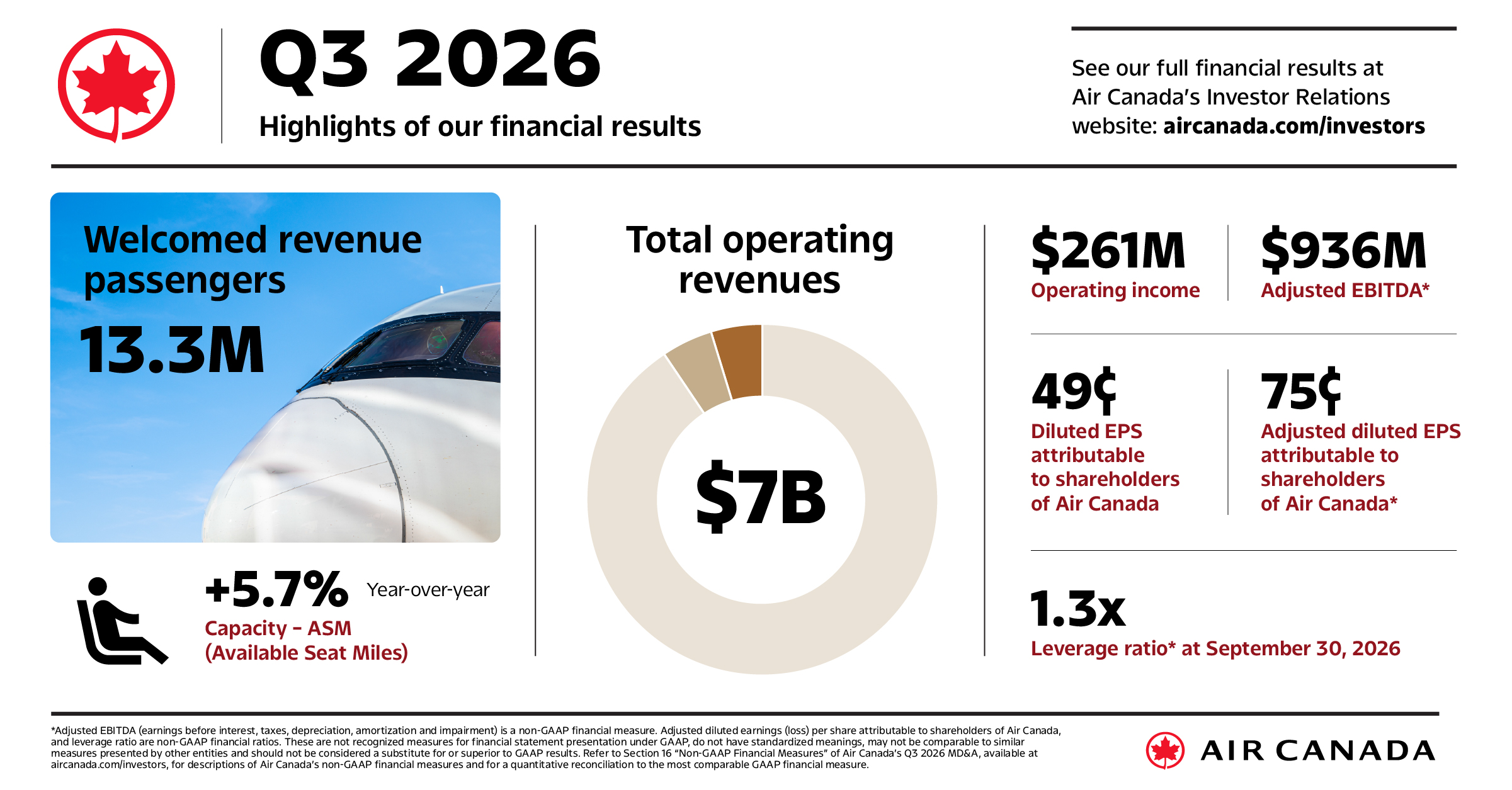 Photo: Air Canada
Passenger demand remained strong during the third quarter. Air Canada's passenger load factor reached 89.1%, an increase of 2.6 percentage points compared with the same period in 2025. Passenger yield, which measures revenue generated per passenger mile, rose 11%, while the number of passengers carried increased by 9.6% to approximately 13.3 million.
Cargo revenues also recorded significant growth, increasing by 33% year over year. Together, these results helped push quarterly operating revenues to a new record.
Despite the revenue growth, operating income declined to C$261 million, compared with C$284 million a year earlier. Net income attributable to Air Canada's shareholders fell to C$139 million from C$264 million, while diluted earnings per share dropped to C$0.49 from C$0.88.
Adjusted EBITDA, another key measure of airline operating performance, reached C$936 million, compared with C$961 million in the third quarter of 2025.
One of the main pressures was the cost of fuel. Air Canada's fuel expenses increased by C$906 million year over year, with fuel prices averaging 10 Canadian cents per litre above the company's expectations for the quarter.
Chief Financial Officer John Di Bert said the airline had taken pricing, capacity and cost measures to limit the impact of higher fuel expenses. He also pointed to the strength of demand across the airline's network and its diversified revenue streams.
Lower Full-Year Expectations
Air Canada has reduced its adjusted EBITDA forecast for 2026 to between C$2.4 billion and C$2.7 billion, down from its previous estimate of C$2.9 billion to C$3.2 billion, issued in August.
The airline also revised its free cash flow expectations. It now anticipates a break-even result, with a margin of plus or minus C$150 million, compared with its previous forecast of C$200 million to C$500 million.
The revised projections reflect expectations of higher fuel prices during the final quarter of 2026. Air Canada now expects jet fuel to average approximately C$1.72 per litre in the fourth quarter, compared with its previous assumption of C$1.29.
The airline also expects to offset around 70% of the estimated additional fuel expenses during the quarter, down from its earlier assumption of 100%.
Capacity growth expectations have been narrowed to approximately 2.75% for the full year compared with 2025.
Share Buyback Plan Announced
Alongside its financial results, Air Canada announced a new share repurchase program. The Toronto Stock Exchange has authorized the airline to buy back and cancel up to 25,197,886 shares, representing approximately 10% of its public float.
The program is scheduled to run from November 9, 2026, through November 8, 2027. Air Canada said repurchases will depend on market conditions and other financial considerations.
The airline also reported net debt of C$4.219 billion at the end of September, down from C$4.830 billion a year earlier. Its leverage ratio improved to 1.3 from 1.6 over the same period.
Air Canada said its financial position, international network and premium product offering provide flexibility as it navigates higher operating costs and uncertainty in global energy markets.