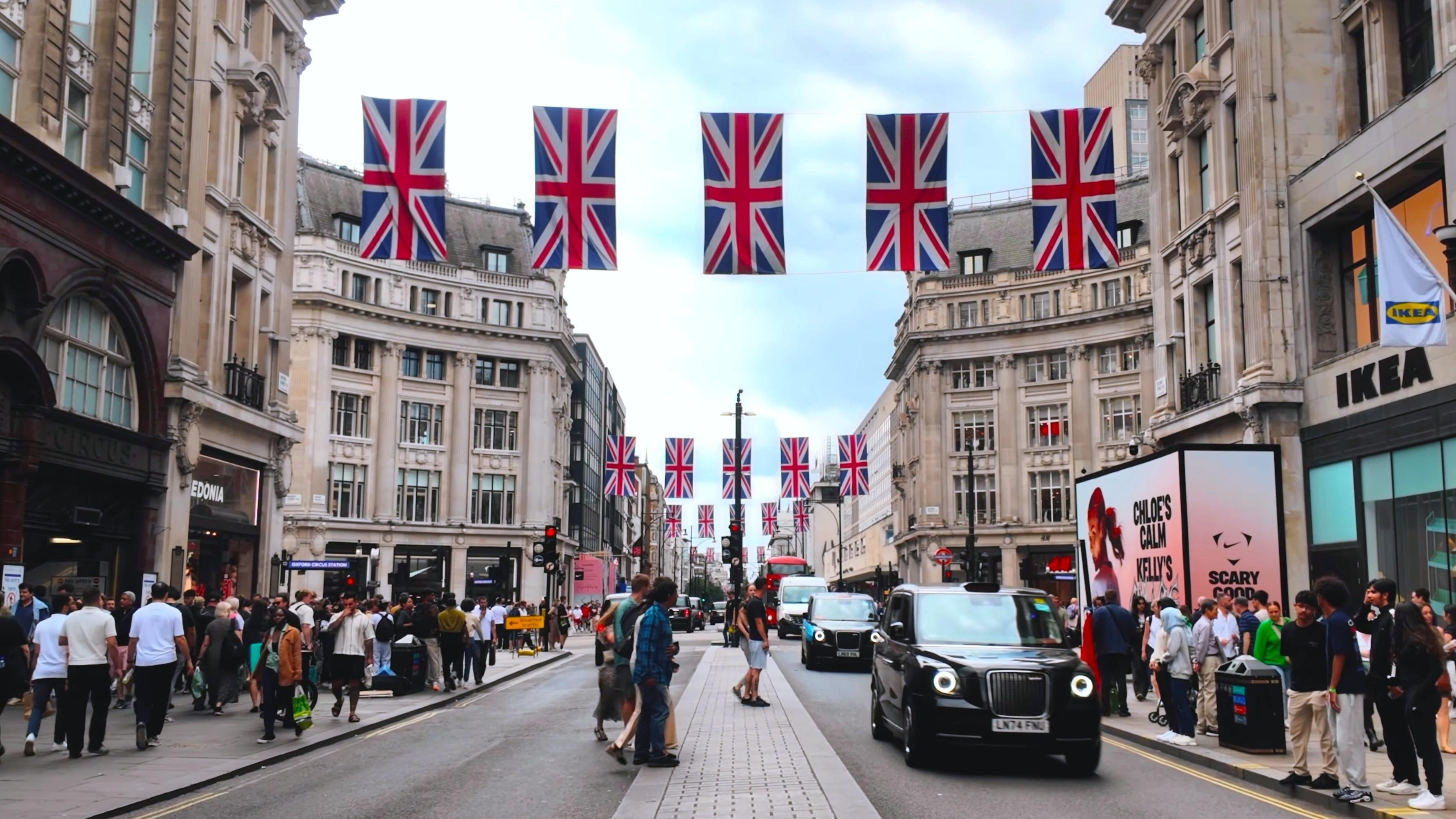
Oxford Street’s first week without traffic has brought a sharp increase in visitors and retail spending, with new figures showing a 16% rise in footfall and a 28% jump in in-store spending compared with the same period last year.
The early results, welcomed by London Mayor Sadiq Khan, suggest that the pedestrianization scheme is already benefiting businesses along one of the UK capital’s best-known shopping streets, even before major redevelopment work begins.
International Visitors, Up 42%
According to figures released by City Hall, visitor numbers in the newly pedestrianized section between Orchard Street and Great Portland Street rose 16% compared with the October 2025 half-term period. International visitor numbers climbed by 42%, while visits to the wider Oxford Street area after 6pm were up 19%.
Payment company Adyen reported an even bigger increase in retail activity. Spending at Oxford Street stores included in its year-on-year comparison rose from approximately £2.9 million to £3.7 million, an increase of 28%. The number of in-store transactions also grew by 19%.
The figures cover the first week of the traffic-free scheme, introduced on October 26, when the stretch between Orchard Street and Great Portland Street was closed to private motor vehicles, buses, taxis, private hire vehicles, bicycles, scooters and pedicabs.
Khan said the initial results had exceeded expectations, with more people visiting the street, spending time there in the evening and shopping at local businesses.
He encouraged Londoners and international visitors to experience the traffic-free area ahead of Christmas, describing the project as part of a wider effort to turn Oxford Street into one of the world's leading public spaces.
Pedestrians, Up to 46% Above Weekday Average
Transport for London (TfL) also reported increased passenger activity at Oxford Circus and Bond Street stations during the first week. Its street-level sensors recorded pedestrian numbers outside Bond Street station reaching up to 46% above the average weekday count recorded at that location between September 7 and October 16, 2026.
Early analysis found no significant overall change in traffic speeds on surrounding roads, while bus operators reported that services continued to run well.
Businesses along the street have also reported positive results. Market Halls, a hospitality venue on Oxford Street, recorded a 29% year-on-year increase in footfall and a 25% rise in sales following the introduction of pedestrianization. The Jane Austen Experience reported 27% more visitors during the first week.
The Oxford Street Development Corporation (OSDC), which is overseeing the wider project, said the additional pedestrian space was encouraging visitors to spend more time in the area.
The current arrangement is the first stage of a phased transformation. Major construction is being kept to a minimum in the immediate weeks to avoid disruption during the busy Christmas shopping season, with further improvements planned in the coming months.
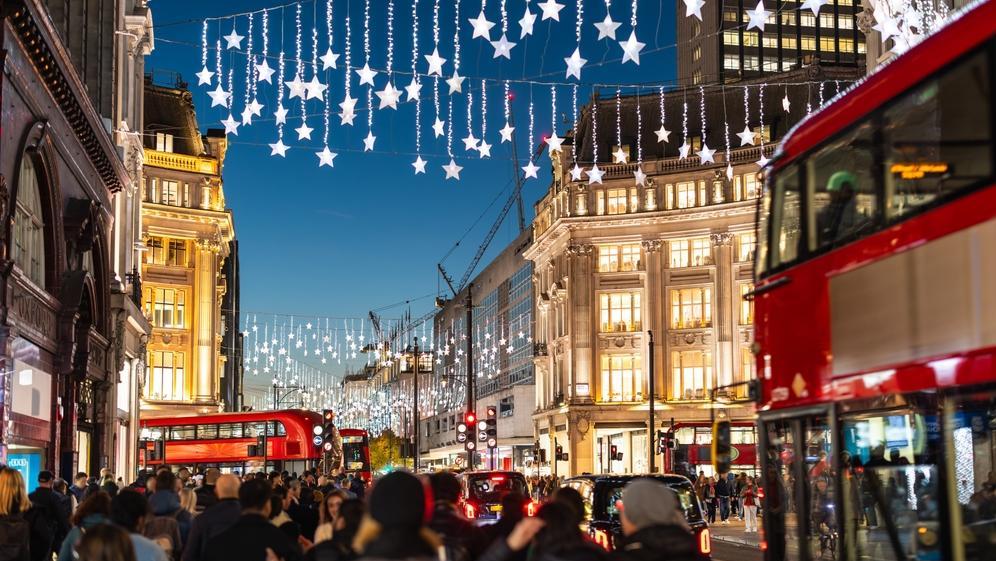 Oxford Street in London at Christmas 2025. Photo: Shutterstock
The broader regeneration project aims to reposition Oxford Street as a destination combining flagship retail stores with hospitality, leisure, culture and workplaces. City Hall hopes the transformation will help the London shopping district compete with major international destinations such as New York's Times Square, Paris' Champs-Élysées and Barcelona's La Rambla.
Christmas will provide an important early test of the changes, as retailers and hospitality businesses enter one of their busiest periods of the year. For now, the first figures suggest that removing traffic from part of Oxford Street has already brought more visitors and increased spending to the area.