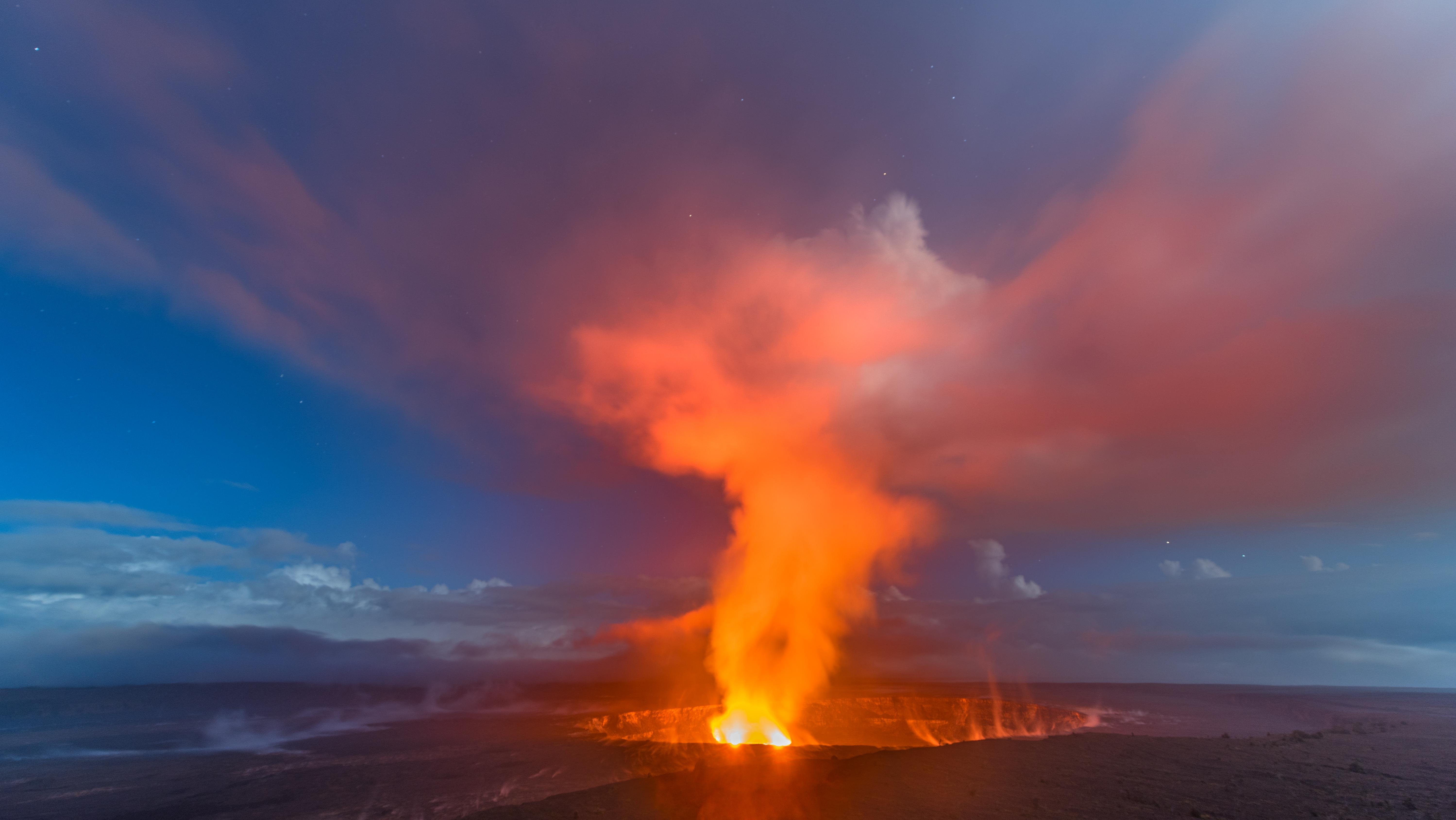
Kilauea volcano in Hawaii has entered a new phase of its ongoing eruption, sending lava fountains approximately 100 feet (30 meters) into the air, according to the US Geological Survey (USGS).
Episode 57 of the eruption began at 12:15 a.m. local time on Monday, November 23, at the Halemaʻumaʻu crater near the summit of Kilauea. The USGS has maintained the volcano's alert level at WATCH and its aviation color code at ORANGE.
The latest activity followed approximately 23 hours of preliminary lava flows, with continuous overflows beginning around 9:31 p.m. on Sunday, November 22. Lava fountains were subsequently observed at the summit vents.
According to the Hawaiian Volcano Observatory, all active vents and lava flows remain confined to Halemaʻumaʻu crater within Hawaii Volcanoes National Park.
Ash and Volcanic Material Could Spread Southwest
Although the eruption remains confined to the crater, authorities are monitoring the movement of volcanic gases and airborne material.
Ground-level monitoring equipment indicates that winds are blowing from the northeast, potentially carrying volcanic emissions and material toward the southwest.
The USGS warned that ash and other volcanic fragments could affect areas beyond the immediate eruption site. The heaviest tephra fall is expected within approximately three miles (five kilometers) of the vents, although lighter particles and fine strands of volcanic glass known as Pele's hair can remain airborne and travel much farther.
The eruption is also releasing water vapor, carbon dioxide and sulfur dioxide. The latter can react in the atmosphere to produce vog, a form of volcanic air pollution that may cause respiratory irritation and other health problems.
Residents and visitors have been advised to minimize exposure to volcanic fragments, which can irritate the skin, eyes and respiratory system.
Aviation Alert Remains at Orange
The USGS has kept Kilauea's Aviation Color Code at ORANGE, indicating significant volcanic activity that requires aviation authorities to remain alert to potential hazards from ash and other airborne material.
Despite the ongoing eruption, the agency reported that lava flows remain within the summit crater. Most previous lava-fountaining episodes in the current eruptive sequence, which began on December 23, 2024, have lasted a day or less.
The observatory is continuing to monitor the eruption and will publish additional updates as the latest episode develops.
Authorities also warned of other hazards around the summit caldera, including unstable crater walls, ground cracks and rockfalls that can be triggered or intensified by earthquakes.
The crater rim surrounding Halemaʻumaʻu remains closed to the public, a restriction that has been in place since late 2007 due to the dangerous conditions.