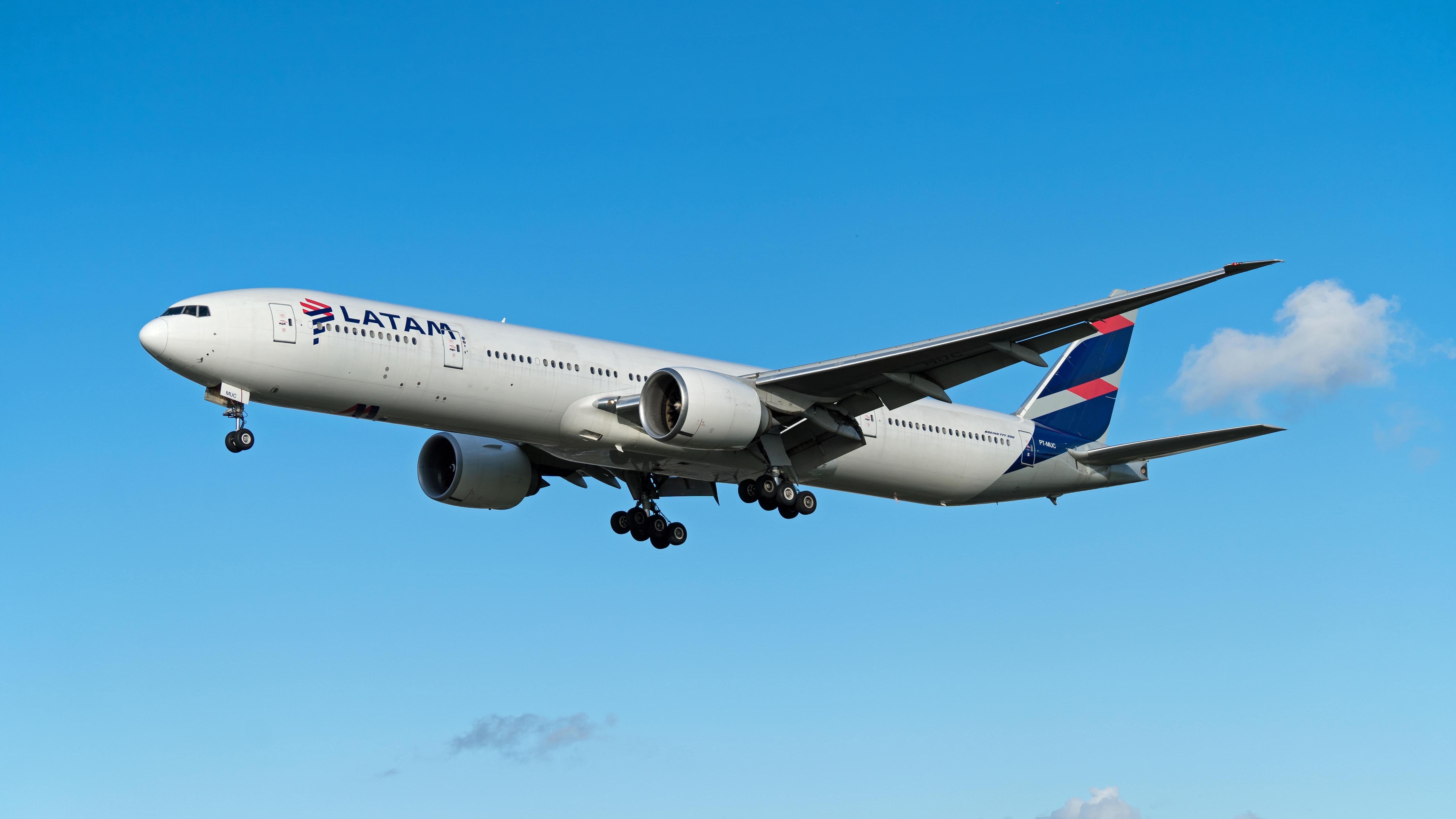
Aviation experts from the National Agency for the Safety of Flight (ANSV) in Italy have concluded their report on the LATAM Airlines Boeing 777‑300ER that suffered a significant tail strike on takeoff from Milan Malpensa in July 2024. The incident that involved an aircraft that was scheduled to fly to São Paulo was caused by a serious error in weight calculation based on incorrect performance data.
The latter led to an early rotation and contact between the tail and runway. Luckily, no one was hurt, but the damage was severe enough that authorities reclassified the event as an accident.
The final report from the ANSV says the crew entered a gross take‑off weight into their performance tools that was about 100 tonnes too low. The true take‑off weight should have been approximately 328.4 tonnes. However, the pilots used 228.8 tonnes when computing performance figures.
That incorrect number was spoken aloud and then used by both pilots on their electronic flight bags, effectively hiding the error because the cross‑check matched across both devices.
Hence, the flight management computer was not able to produce valid take‑off speeds for the runway and weight combination, which ultimately triggered a “V‑speeds unavailable” warning that the crew did not fully understand. Using the incorrect performance figures, the calculated rotation speed was about 149 knots, roughly 30 knots below what was required for the aircraft’s actual weight.
As the jet sped down runway 35L, the pilots rotated at a lower speed and raised the nose. The tail scraped along the surface for hundreds of meters before the aircraft finally became airborne. The crew stopped the climb, declared urgency, and dumped approximately 72 tonnes of fuel to cut weight before safely returning to the Italian airport.
Inspections revealed that the tail‑skid assembly, the drain mast, and the surrounding structure were damaged. After extended repairs, the aircraft returned to service at the start of 2025.