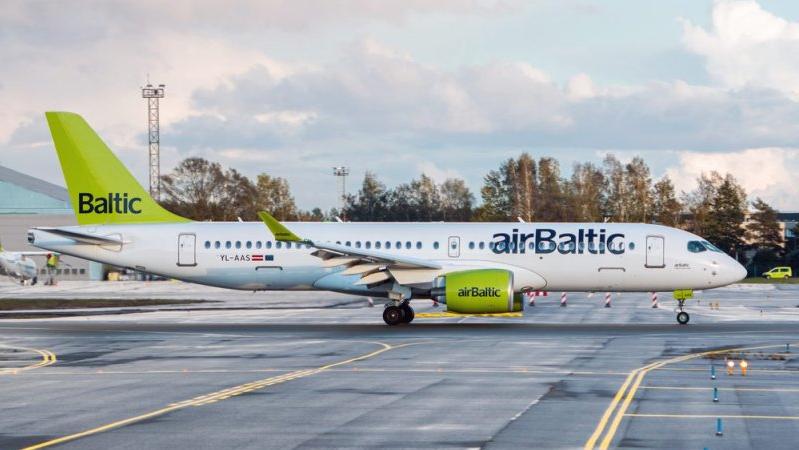
Latvia’s national carrier airBaltic has added another aircraft to its growing fleet, continuing its steady expansion as demand for travel in the region rises.
On February 15, the airline received a brand new Airbus A220-300 in Riga. The aircraft, registered YL-BTD, is the second one delivered to airBaltic this year and brings its total number of A220-300 jets to 54. This model has become the backbone of the airline’s operations, handling most of its routes across Europe and beyond.
The aircraft will be used both on airBaltic’s own network and through agreements with partner airlines. These arrangements allow airBaltic to temporarily provide aircraft and crew to other carriers, giving the company flexibility to respond to changing demand throughout the year. It also helps the airline keep its planes busy during quieter travel periods.
The A220-300 has played a major role in the airline’s growth since it first joined the fleet in 2016. In that time, airBaltic has carried more than 24 million passengers on the type. The aircraft has completed roughly 250,000 flights and logged over 551,000 hours in the air. Those numbers reflect how central the jet has become to the airline’s day to day operations.
Passengers flying on the aircraft will notice several comfort improvements compared to older planes. The cabin includes wider seats, larger windows, and more space for carry-on bags. It is also quieter, both inside the cabin and for people on the ground. The aircraft burns less fuel and produces fewer emissions, which helps the airline lower its environmental impact.
airBaltic has also been investing in onboard technology. Last year, it became the first airline in Europe to introduce free high-speed Starlink internet across its fleet. More than 20 aircraft already have the system installed, and more are being upgraded. This allows passengers to stay online for the entire flight, from departure to arrival.
The airline’s latest expansion comes as its passenger numbers continue to climb. In January 2026, airBaltic carried 338,500 passengers, its busiest January on record and a 3% increase from the year before. Flight numbers rose even faster, up 5.2% to 3,507.
In 2025, the airline transported 5.2 million passengers, the highest total in its history, and operated 47,600 flights, showing steady growth as air travel continues to recover and expand across its network.