Europe is facing a growing mismatch between the rising threat of wildfires and the number of professionals available to respond to them. New Eurostat data cited by the European Trade Union Confederation (ETUC) show that the EU had 372,400 professional firefighters in 2025, down from 390,600 in 2024, a reduction of about 18,200 personnel in a single year.
2025, the Worst Year on Record
The decline comes against the backdrop of increasingly severe wildfire seasons across Europe. The European Commission's Joint Research Centre (JRC) confirmed that 2025 was the EU's most destructive wildfire season on record, with 1,079,538 hectares burned across the bloc. The total was nearly twice the 2006–2024 average, while fires affected 25 of the EU's 27 member states.
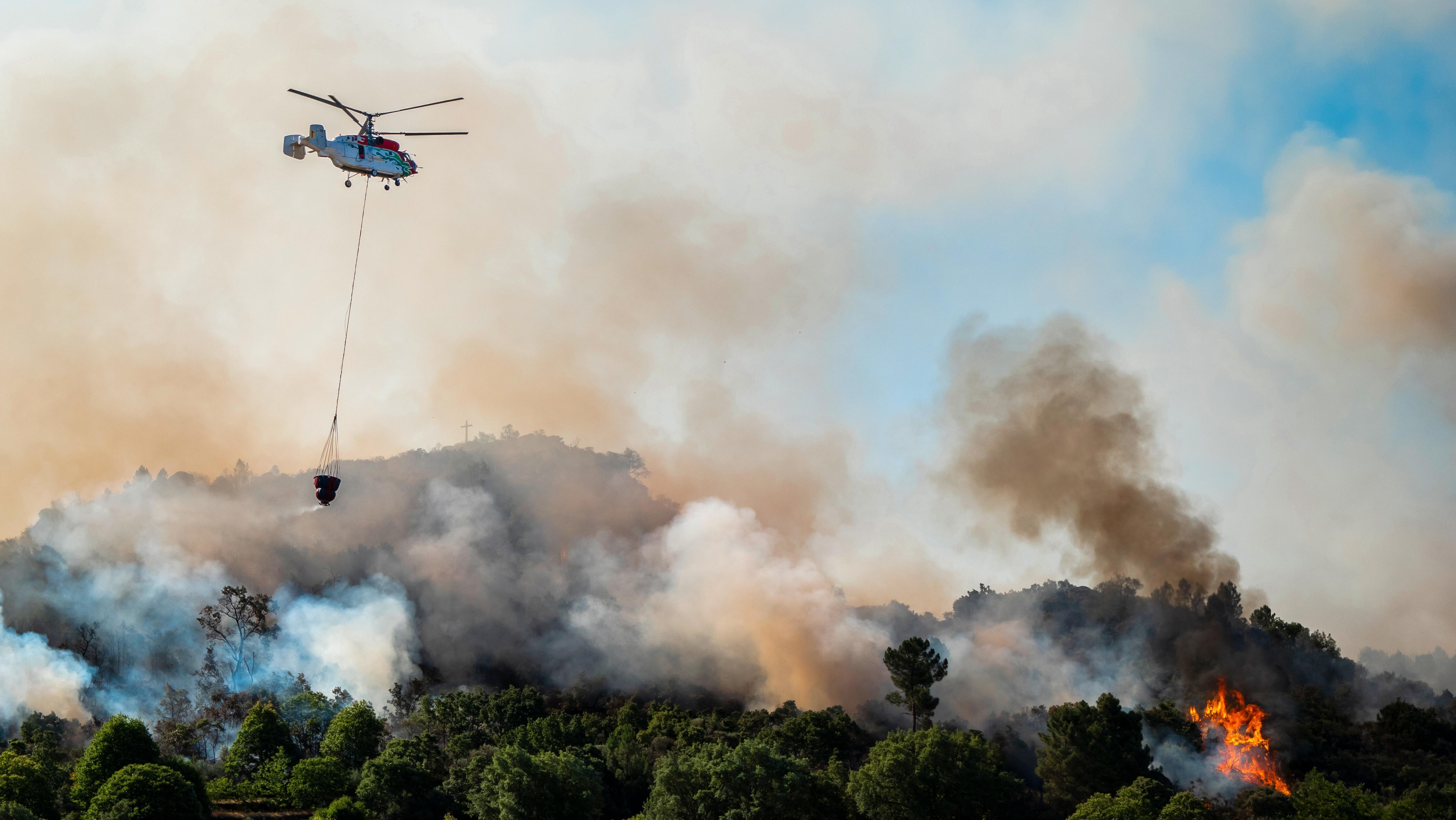
The situation remains a major concern as Europe has entered another summer of elevated wildfire risk with the European Commission already deploying one of its largest wildfire response operations for 2026, with 777 firefighters from 14 countries pre-positioned in high-risk areas including Greece, Italy, France, Spain, Portugal and Cyprus. The EU has also made 22 firefighting aircraft and five helicopters available for deployment.
The pressure has become particularly visible in France and Spain. In July, the EU Civil Protection Mechanism sent aircraft, helicopters, firefighters and vehicles to both countries as large fires triggered evacuations affecting more than 300,000 people. France received seven planes and four helicopters, while Spain received six firefighting aircraft, along with 134 personnel and 41 vehicles from Portugal.
Growing Concerns
The firefighter figures are raising concerns about whether national services have enough personnel to deal with increasingly demanding fire seasons. Eurostat's figures cover professional firefighters and include both firefighters and forest firefighters, while volunteer firefighters are not included in the employment statistics.
ETUC argues that staffing reductions are particularly troubling as climate change contributes to longer and more intense wildfire seasons. The organization has called for changes to EU economic governance rules so governments can make greater investments in essential public services and emergency workforces.
The staffing issue also comes as the EU itself acknowledges that wildfire seasons are changing. JRC analysis says fires are starting earlier, occurring more frequently and becoming more intense, with heatwaves contributing to conditions that allow fires to spread rapidly.
For 2026, the EU has increased its emergency preparations, including the largest-ever pre-positioning operation of firefighters and firefighting aircraft. The Commission has also announced plans to acquire 12 new firefighting planes and five helicopters for the permanent rescEU fleet, although the first new aircraft are not expected until 2028.