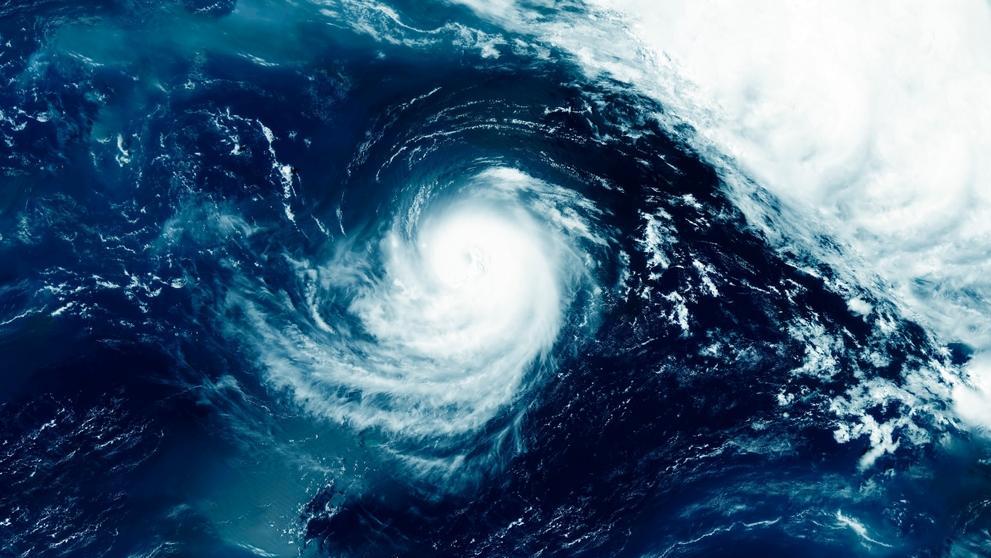
China is facing unusual tropical activity on several fronts this morning, August 24, 2026, as the China National Meteorological Center continues to issue a blue typhoon warning while monitoring several tropical systems in the region.
The strongest system is Typhoon No. 18, Saudel, which the Chinese Meteorological Center has defined as a Super Typhoon.
As of the Meteorological Center's official update at 10:00 am China time, the storm's center was about 1,520 km east of Taipei, with maximum winds of 52 meters per second (about 187 km/h).
The typhoon is moving west-northwest at 25-30 km/h, and according to the official forecast, its strength is expected to remain similar or even strengthen slightly.
The China Meteorological Center estimates that on August 26, the storm will enter the East China Sea and later move towards the coast of eastern China.
Several Tropical Systems at the Same Time
Alongside the Super Typhoon, other systems continue to operate.
Typhoon no. 19, Narra, is located in the Gulf of Tonkin area, southwest of Beihai City, Guangxi Province. It is accompanied by winds of about 23 meters per second and is expected to continue to approach the coastal area between Guangxi and the western Leizhou Peninsula in Guangdong.
Typhoon number 20, Jianlawi, which has weakened to a tropical depression and is located near the coast of Fujian this morning. According to the official forecast, it is expected to reach the coast during the day and weaken rapidly thereafter.
Meanwhile, another system joined the list this morning: Typhoon number 21 of the season, Atsani, formed this morning in the western Pacific Ocean. At 08:00, winds around its center were at 18 meters per second, and it was about 1,970 kilometers east-southeast of Taipei.
However, the Chinese Meteorological Center emphasizes that Atsani is not expected to affect China's maritime space at this stage.
Up to 240 MM of Rain and Strong Winds
The concern is not limited to the storm track. Heavy rain is expected in a number of regions between the afternoon of August 24 and August 25, including Fujian, Taiwan, Guangdong, Zhejiang, Guangxi, Jiangxi, Hunan and Hubei. Some regions are reportedly expecting 100-240 mm of precipitation within 24 hours.
At the same time, strong winds are expected in large maritime areas, including the East China Sea, the Taiwan Strait, the Gulf of Tonkin, and areas along the coasts of Shanghai, Zhejiang, Fujian, Guangxi, and Guangdong.
China Eastern Warns of Flight Disruption
The impact is already reaching aviation. China Eastern Airlines has issued an official notice to passengers stating that Typhoons Narra and Jianlawi are expected to affect some flights to and from seven destinations on August 24-25:
Nanning, Guilin, Beihai, Zhanjiang, Fuzhou, Nanchang and Wenzhou.
The company called on passengers to monitor flight status and SMS messages, and clarified that it may make adjustments to the flight schedule depending on the development of the storms, and in the event of a delay or cancellation as a result of the changes, passengers can request a refund or reschedule free of charge through the company's channels, in accordance with the terms it published.
Authorities Are Also Preparing in Tourist Areas
China's Ministry of Emergency Management described the situation as one involving high risk, a wide front, and significant uncertainty. The ministry held a joint emergency meeting with the Meteorological Service, the Ministry of Transport, the Ministry of Natural Resources, and other agencies, and ordered increased preparedness in sensitive areas.
Among the places specifically mentioned are also tourist sites, along with areas prone to flooding, mountainous areas, construction sites and vessels. Authorities were required to prepare, as necessary, for closures, cessation of activities and evacuation of people from areas at risk.
At the same time, twenty thousand government aid items have already been delivered to Guangxi Province, including folding beds, blankets, rain gear, and other basic equipment, for the care of evacuees and victims of Typhoon Narra.