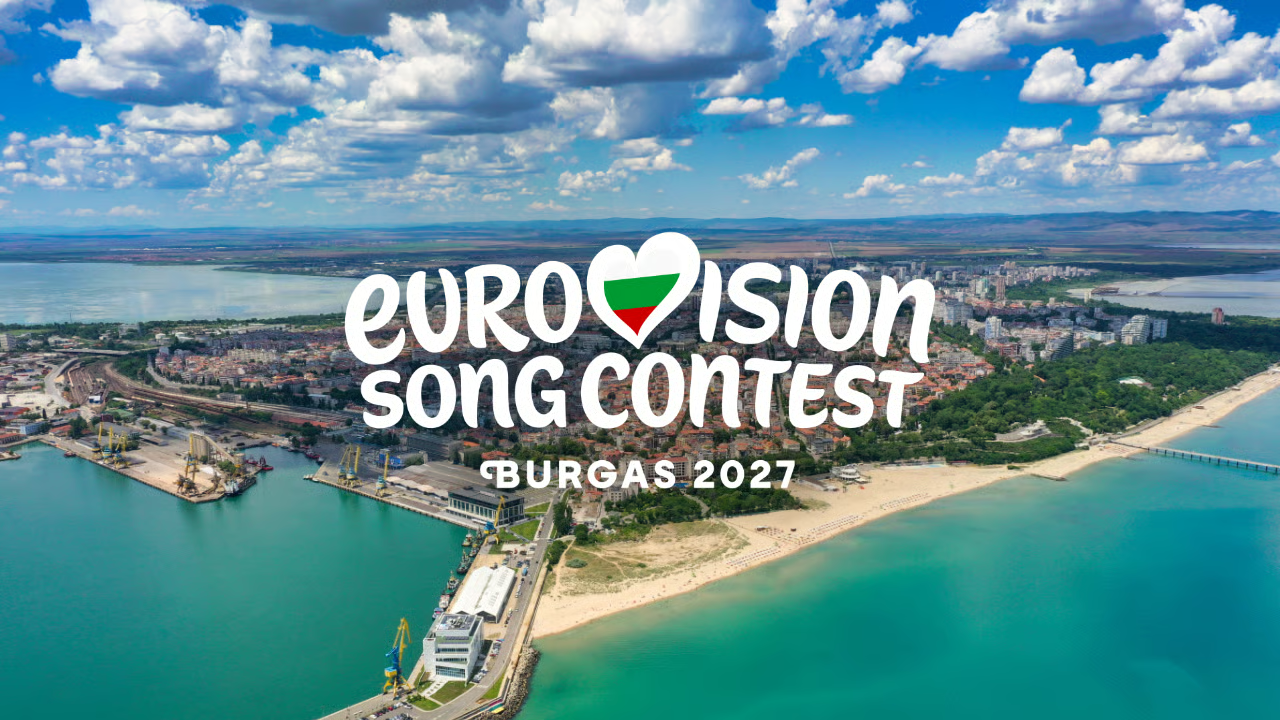
Canadian Prime Minister Mark Carney has announced that Canada will participate in the Eurovision Song Contest for the first time in 2027 in Burgas, Bulgaria.
National Search Is Open
CBC/Radio-Canada has opened a national search for the artist who will make history as Canada’s inaugural Eurovision representative. Applications are open from August 31 through September 9, 2026.
The broadcaster is looking for an established Canadian performer with strong live experience, a distinctive artistic identity and the ability to deliver a demanding three-minute Eurovision performance without lip-syncing or pitch correction.
Applicants must be Canadian citizens or permanent residents aged at least 18 by May 1, 2027. The selected performer will be chosen before the Eurovision song is developed, with CBC/Radio-Canada emphasizing that candidates should not submit or promote a song as part of the application.
Finalists to Be Announced in Autumn
The eventual entry will include both of Canada’s official languages, English and French, although other languages may also be incorporated. CBC/Radio-Canada says it will consult the chosen artist about their comfort with the official languages as the song is developed.
The selection process will begin with CBC/Radio-Canada assessing applications and creating a shortlist, with finalists expected to be announced in autumn. Canadians will then have a say in choosing the representative through a digital public vote combined with a music industry jury vote.
The successful artist is expected to be announced by late fall 2026.
The broadcaster is also seeking someone capable of handling the demands that come with Eurovision, including extensive rehearsals, domestic and international travel, media attention and a major arena performance. An existing European audience or profile is considered an advantage, while a strong digital following could help generate support during the Eurovision voting process.
Canada's debut comes after years of participation by countries outside Europe, including Australia, which joined the contest in 2015; Israel, which debuted in 1973 and remains one of Eurovision's longest-running participants; and Morocco, which participated just once, in 1980 .
Eurovision's global reach has also made participation increasingly attractive as a platform for cultural exposure.
For Canada's first entry, CBC/Radio-Canada says it wants an artist who genuinely embraces the competition's theatrical spirit and sees the opportunity as a personal dream rather than simply another professional engagement.