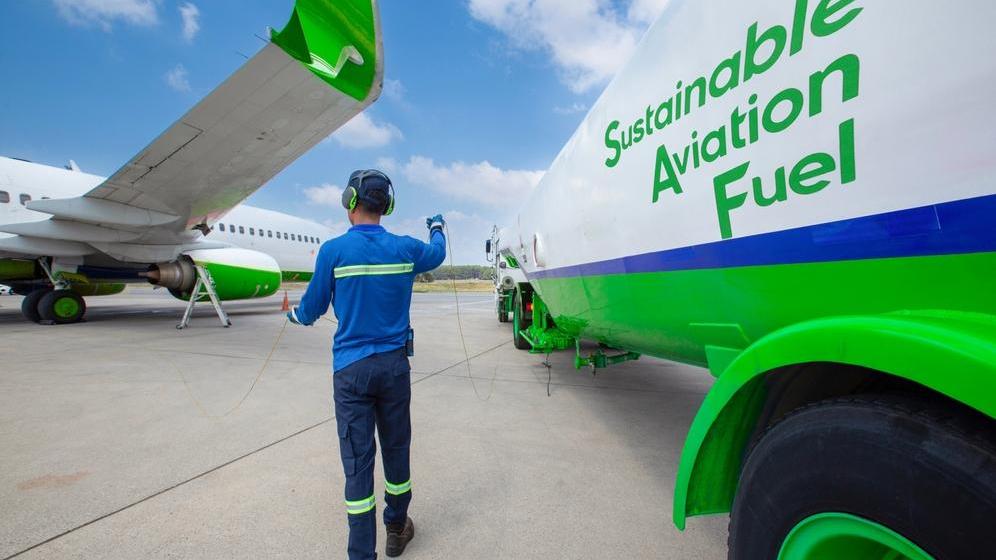
American Airlines and Google have announced a record-breaking agreement to purchase Sustainable Aviation Fuel Certificates (SAFc), considered the largest deal ever disclosed between an airline and a single corporate customer in this space.
The agreement will allocate approximately 35 million gallons (132 million liters) of (SAF) over the next three years. The move is expected to reduce carbon dioxide emissions by nearly 300,000 tons.
The fuel will be delivered to Chicago O'Hare Airport using existing infrastructure, with the SAF component being manufactured from recycled raw materials, including used cooking oils. Google will receive the environmental rights associated with the deal as part of its efforts to reduce the carbon footprint of its employees' commutes.
According to Jill Blickstein, American Airlines' chief sustainability officer, the "industry-leading agreement with Google is a critical step forward in reducing emissions" from the company's operations "By working with leaders like Google who share our commitment to innovation, we’re helping to grow demand for SAF and support the development of a stronger, more resilient market.”
Google also sees the move as a lever to accelerate the transition to green aviation. Kate Brandt, the company's chief sustainability officer, noted that "this strategic collaboration with American Airlines demonstrates how companies can work together to scale critical sustainability technologies."
The agreement was made possible, in part, by a dedicated tax credit for sustainable aviation fuel approved in the state of Illinois. The state's governor, JB Pritzker, said the move strengthens Illinois' position as a global aviation hub and advances the transition to clean energy.
According to industry data, the global aviation industry is currently responsible for approximately 2%-3% of global carbon emissions. SAF fuels are considered one of the key tools for reducing emissions in the industry, with the potential to reduce emissions by up to 80% compared to conventional jet fuel over the entire life cycle of the fuel.
The two companies are also collaborating on other environmental projects. During 2025, American Airlines, Google, Contrails.org, and Flightkeys conducted a 16-week experiment aimed at reducing the formation of contrails from aircraft. According to the experimental results, there was a 62% decrease in contrail formation, which contributes to atmospheric warming.
The field of sustainable aviation fuels is developing rapidly. Late last month, we reported on a new project by Japan Airline, Tohoku University and other Japanese companies that is exploring the use of biofuel produced from rice bran oil byproducts to power ground equipment at Yamagata Airport. The experiment is a pioneering effort to advance decarbonization and develop sustainable energy solutions for the aviation industry.