Without a doubt and for good reason, Italy is one of the world's most visited destinations, courtesy of its ancient landmarks, incredible food, charming villages, and scenic train journeys. But while planning your itinerary is exciting, understanding a few local customs and travel rules before you arrive can save you from unnecessary fines, awkward moments, and expensive surprises.
Whether you're exploring Rome, Venice, Florence, Milan, the Amalfi Coast, or a less-known but equally gorgeous location, these practical tips will help you travel like a local.
Fines Up to €100 for Improper Ticket Validation
Italy's rail network, although riddled by frequent strikes, is one of the easiest ways to travel around the country, but ticket rules can catch visitors off guard.
However, these are some basic rules to follow if you wish your journeys to go smoothly and, most importantly, fine-free.
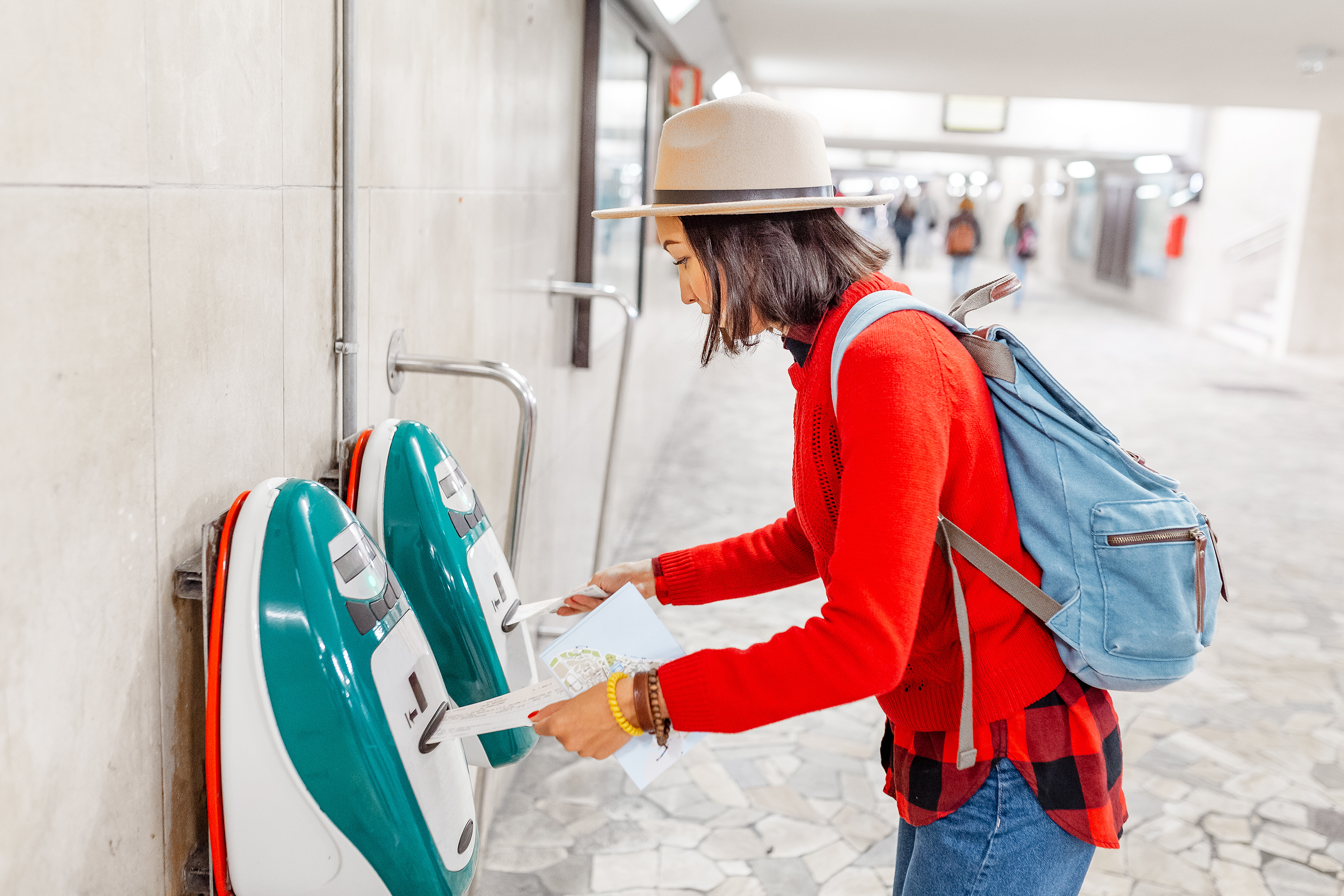 Validate your train tickets or risk a big fine. Photo: Shuttertock
For starters, if you're traveling with a paper regional train ticket, you'll usually need to validate it in the green or yellow machines at the station before boarding. The machine stamps the date and time on your ticket, and an unvalidated ticket can result in an on-the-spot fine.
If you're using a digital regional ticket purchased through the official Trenitalia app or website, pay close attention to the instructions. Many regional digital tickets now require passengers to complete a check-in before departure through the app or confirmation email. Simply having the QR code isn't always enough.
For high-speed Frecciarossa and Intercity trains, no validation is needed because your ticket already includes a reserved seat.
So what happens if you're unaware of these rules? Failing to validate a paper regional train ticket or check in a digital regional ticket will bring you a fine that typically ranges from around €50 to €100 if paid promptly, with higher penalties if payment is delayed. The exact amount depends on the region and the railway operator.
In some regions, the penalty can increase substantially if not paid within the specified period. For example, in South Tyrol (Alto Adige), the fine for traveling with an unvalidated ticket was increased to €90 if paid within five days, rising further if payment is delayed.
Ride-Sharing Isn't the Same in Italy
Many travelers expect to open their usual ridesharing app and book an inexpensive ride. In most of Italy, that's not how it works.
Standard ride-sharing services, however, are largely unavailable because of local regulations. Instead, they mainly offer premium chauffeur services, which are significantly more expensive.
For everyday transportation, locals typically use licensed taxis booked through apps such as itTaxi or FREENOW, where fares are regulated and transparent.
Understand the "Coperto" Fee
One particularly unpleasant surprise for many visitors comes when the restaurant bill arrives is the coperto, a small cover charge applied per person. It helps cover table service, place settings, and general dining costs. It's completely legal and is usually listed on the menu.
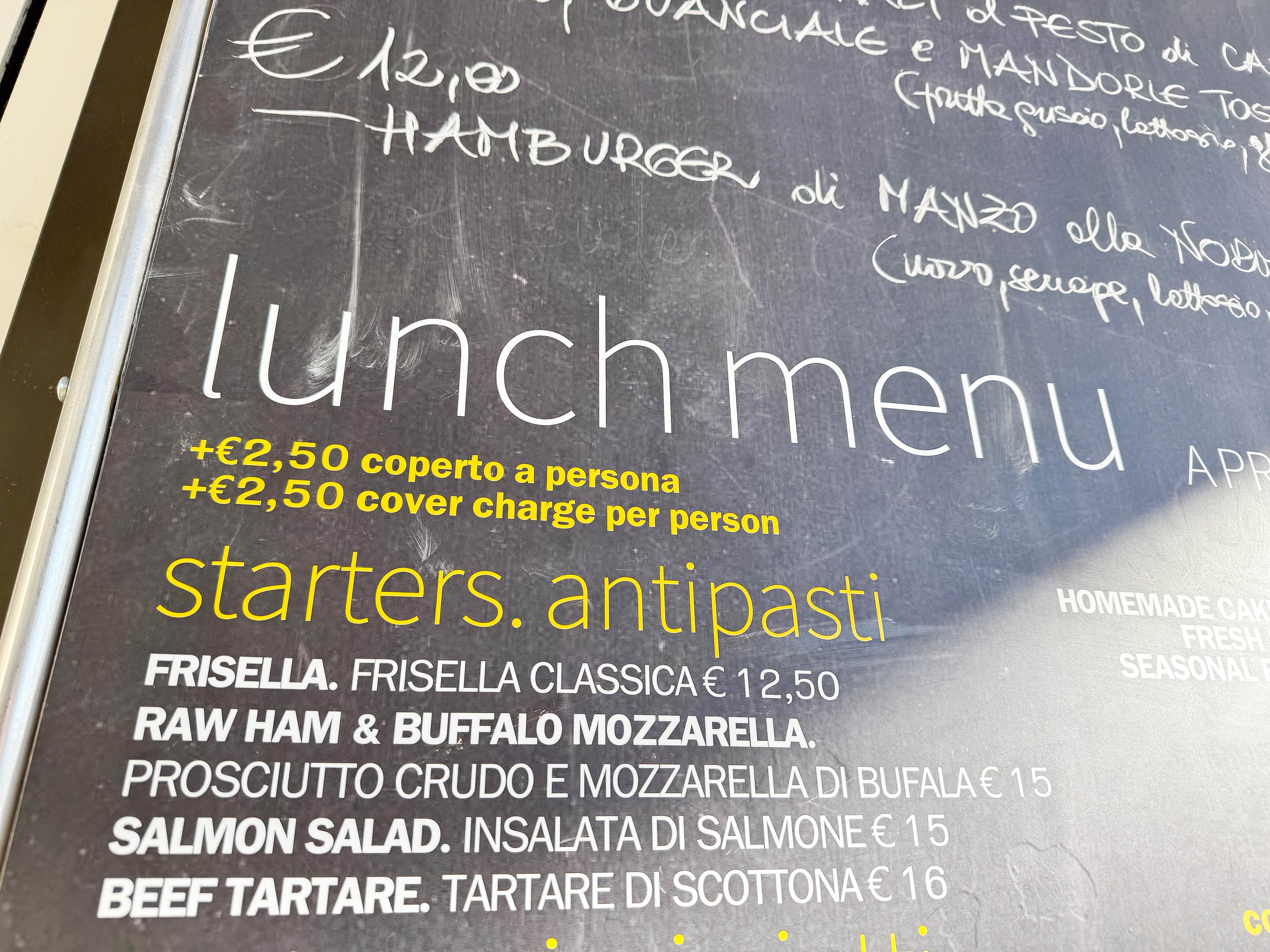 Watch our for the coperto fee. Photo: HelgaQ / Shutterstock.com
Unlike in some countries, this isn't a hidden fee, it's simply part of dining out in Italy and it is (or should be) clearly displayed on menus. So how much is it? Around €2–€3 per person at most Italian restaurants. Budget eateries may charge as little as €1, while upscale or tourist-heavy restaurants can charge €5 or more. In exceptional cases at famous tourist destinations (such as parts of Venice, Capri, or Positano), it can be €5–€12 per person, although these are outliers rather than the norm.
Don't Accidentally Order a Glass of Milk
 Un latter, per favore! Photo: Shutterstock
One of Italy's most famous tourist mistakes involves a single word. In Italian, latte simply means milk. If you ask for "a latte," you may receive exactly tha, a glass of milk.
If you want coffee with steamed milk, order a caffè latte. If you want what Italians consider a regular coffee, simply ask for un caffè, which is an espresso.
Coffee Prices Depend on Where You Drink It
Italy's coffee culture is built around quick stops at neighborhood cafés.
Ordering your espresso at the counter, known as al banco, is often the cheapest option and how most locals enjoy their coffee.
 Be careful where you sit for coffee while in Italy! Photo: columbo.photog / Shutterstock.com
Now let's speak money. Order your coffee at the counter and you'll usually pay around €1.20 to €1.80 for an espresso. Sit down at a table instead, and the same coffee typically costs €2.50 to €4. In busy tourist hotspots, outdoor table service can push the price to €5 or more, and at iconic cafés in places like Venice's Piazza San Marco, an espresso can even exceed €10.
Want an Early Dinner? Don't Even Think About It!
If you're hungry at 6:00 p.m., you may discover many restaurants haven't even opened yet.
 Early dinner in Italy? No way! Photo: Shutterstock
Dinner service commonly begins around 7:00–7:30 p.m., while many Italians don't eat until 8:00 or even 9:00 p.m. Some restaurants catering to tourists serve meals earlier, but if you're looking for a more authentic local atmosphere, dining later is often part of the experience.
Reserve Famous Attractions Well in Advance
Italy's most famous attractions regularly sell out. Tickets for landmarks such as the Colosseum in Rome and the Vatican Museums can disappear weeks before your visit, especially during spring, summer, and major holidays.
 Book major tourist attractions well in advance. Photo: Shutterstock
Booking directly through official ticket websites ahead of time usually provides the best prices and helps you avoid expensive resale tickets or long queues.
Carry Some Coins
It's not just for the Trevi Fountain. Although contactless payments are common across Italy, keeping a few euro coins in your pocket is still useful.
 Be sure to have change on you in Italy. Photo: Shutterstock
Many public toilets at train stations, parks, and busy tourist areas charge between €0.50 and €1 for entry. Having change ready can save time when you're on the move.
Don't Walk Around Shirtless
While there isn't a national rule to ban walking around in public without a shirt in Italy, some municipalities have adopted their own local regulations. Since July 2022, Sorrento has prohibited people from walking around the town shirtless or in swimwear. Violators can be fined €25–€500. The rule applies throughout the municipality, not just the historic center.
 Walking shirtless in Italy could get you a fine. Photo: Shutterstock
 - The island municipality of Favignana introduced rules banning people from walking through town in swimwear or shirtless, with fines ranging from €25 to €150.
-
- Varenna, a famous Lake Como village, introduced fines of €50–€200 for walking around shirtless or in swimwear outside beaches and boat areas as part of new tourism management measures.
-
- The Ligurian seaside town of Diano Marina also prohibits going shirtless or wearing only swimwear in the town center (outside beach and waterfront areas), with fines ranging from €25 to €500.
-
- All in all, Italy rewards travelers who embrace local customs, and all you need is a few minutes of preparation to save you from unnecessary fines, confusing situations, and unexpected expenses.