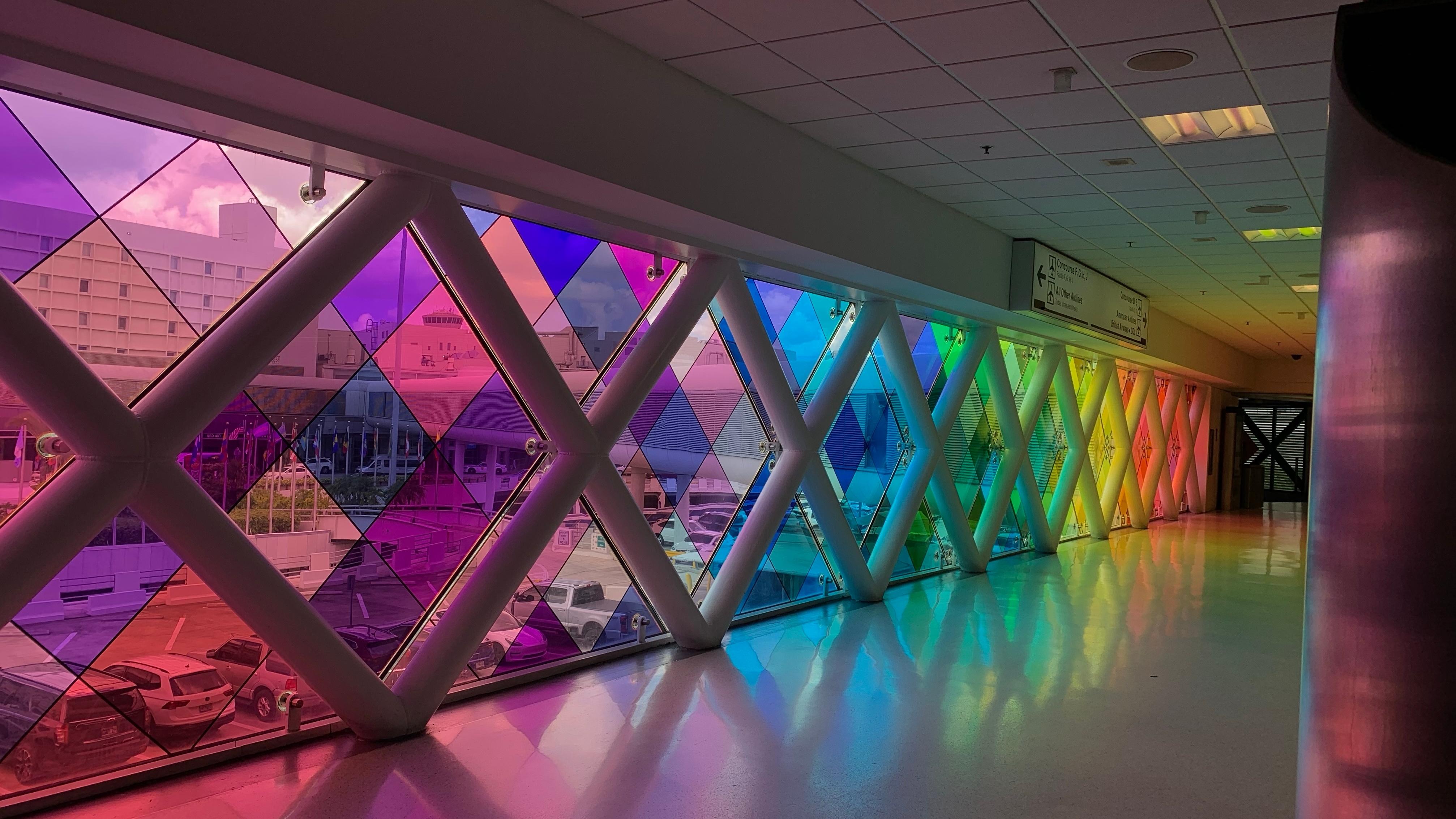
After being named the most-improved mega airport in North America in a ratings-based satisfaction study in September 2025, Miami International Airport (MIA) has continued its transformation through AI-powered services, biometric technology, and terminal enhancements under its Forward Flight initiative.
Digital Innovation and Cultural Enhancements
In January 2026, the airport began showcasing a wave of technology, branding, and passenger experience improvements as part of Forward Flight, a modernization initiative launched to prepare the airport for future growth and major global events, including the 2026 FIFA World Cup.
Miami-Dade County Mayor Daniella Levine Cava announced that the initiative, developed with a 14-member advisory team of aviation, tourism, business, labor, and technology leaders, has been transforming the airport through a mix of digital innovation, operational improvements, and cultural enhancements.
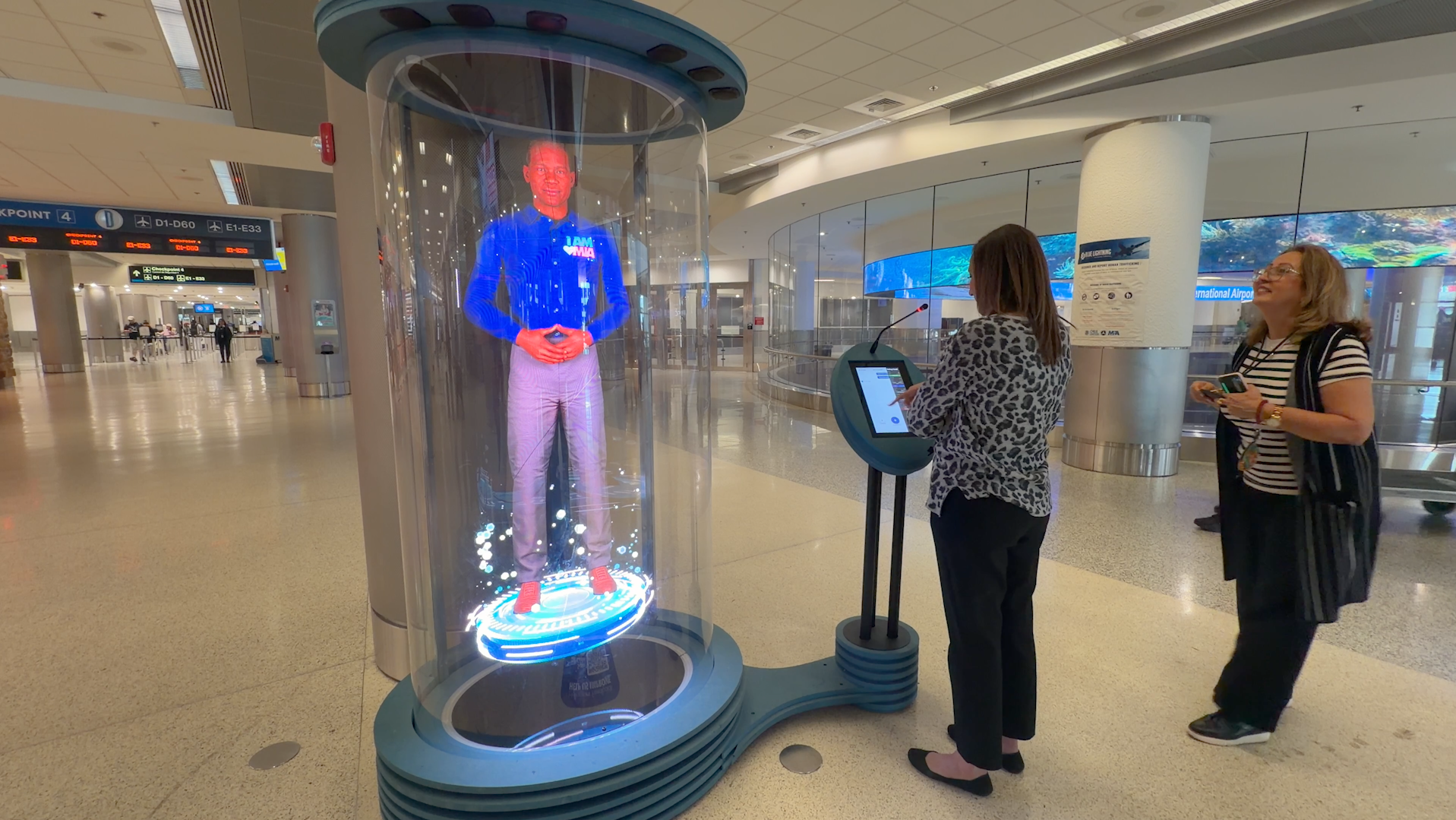 MIA’s hologram chatbot. Photo: Miami Airport
Travelers are already seeing the changes throughout the airport. New AI-powered hologram chatbots provide passenger assistance, while MIA has rolled out what it describes as the largest biometric entry deployment at any U.S. airport. The initiative also includes refreshed airport branding, public art installations, cultural activations, architectural lighting, baggage claim murals, and terminal beautification projects, all building a stronger sense of place for travelers.
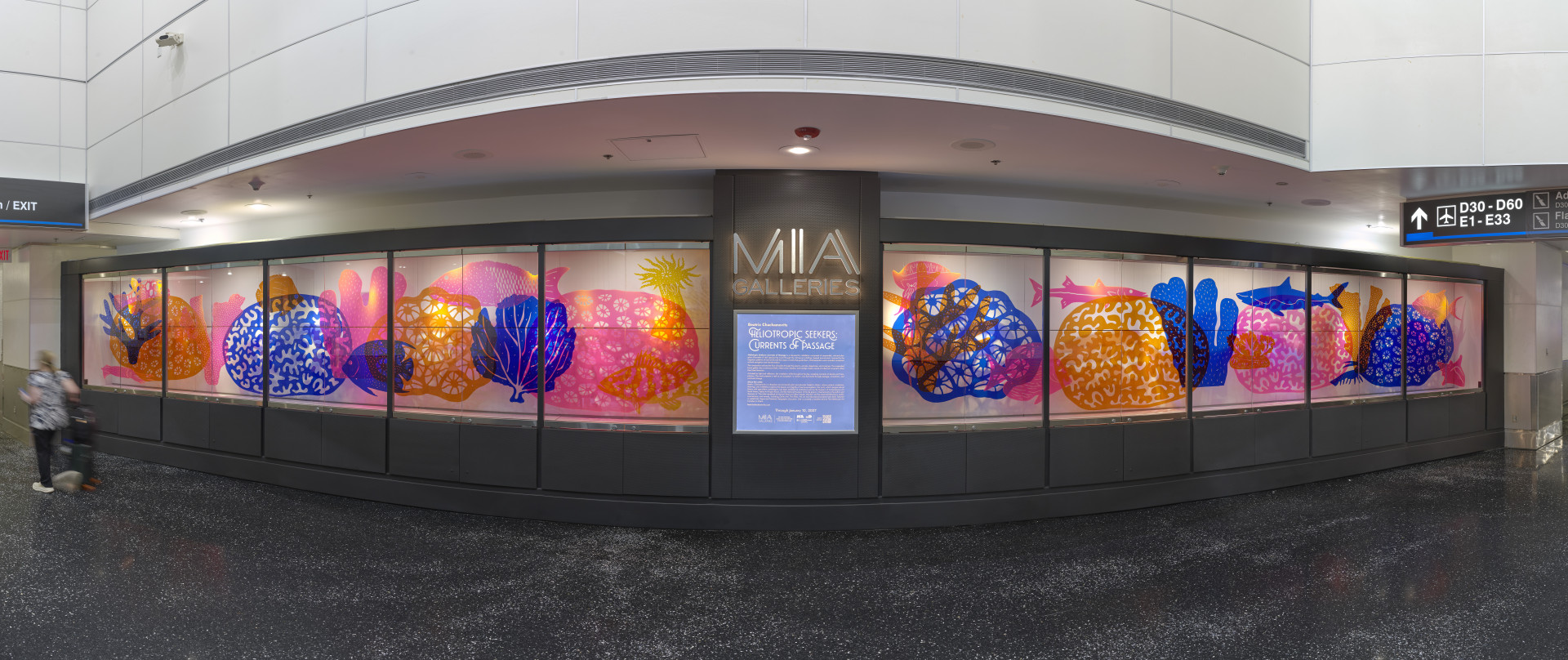 Photo: Image courtesy of MIA Galleries
The airport has also introduced architectural lighting displays, large-scale public art, baggage claim murals, and terminal beautification projects as part of the broader makeover.
Ongoing Expansion
The modernization effort comes as MIA continues to expand its infrastructure to accommodate growing passenger numbers and future demand.
In February, American Airlines announced its plans to extend Terminal D at Miami International Airport starting in 2027, building a new wing with 17 wide-body boarding gates as part of a multi-year plan to upgrade the airport's passenger experience.
The new wing, spread across three floors, will allow for the full operation of large aircraft, eliminating external boarding and extending waiting areas so that every gate has a designated adjacent area. The plan also includes future preparations for receiving international flights as well as a direct connection to passport control.
In June, PS opened a luxury private terminal inside the airport's former Pan American Airways headquarters.
MIA handled more than 55 million passengers last year, remains the busiest U.S. airport for international freight and one of the nation's busiest international passenger gateways, while preparing for increased traffic during upcoming international events.